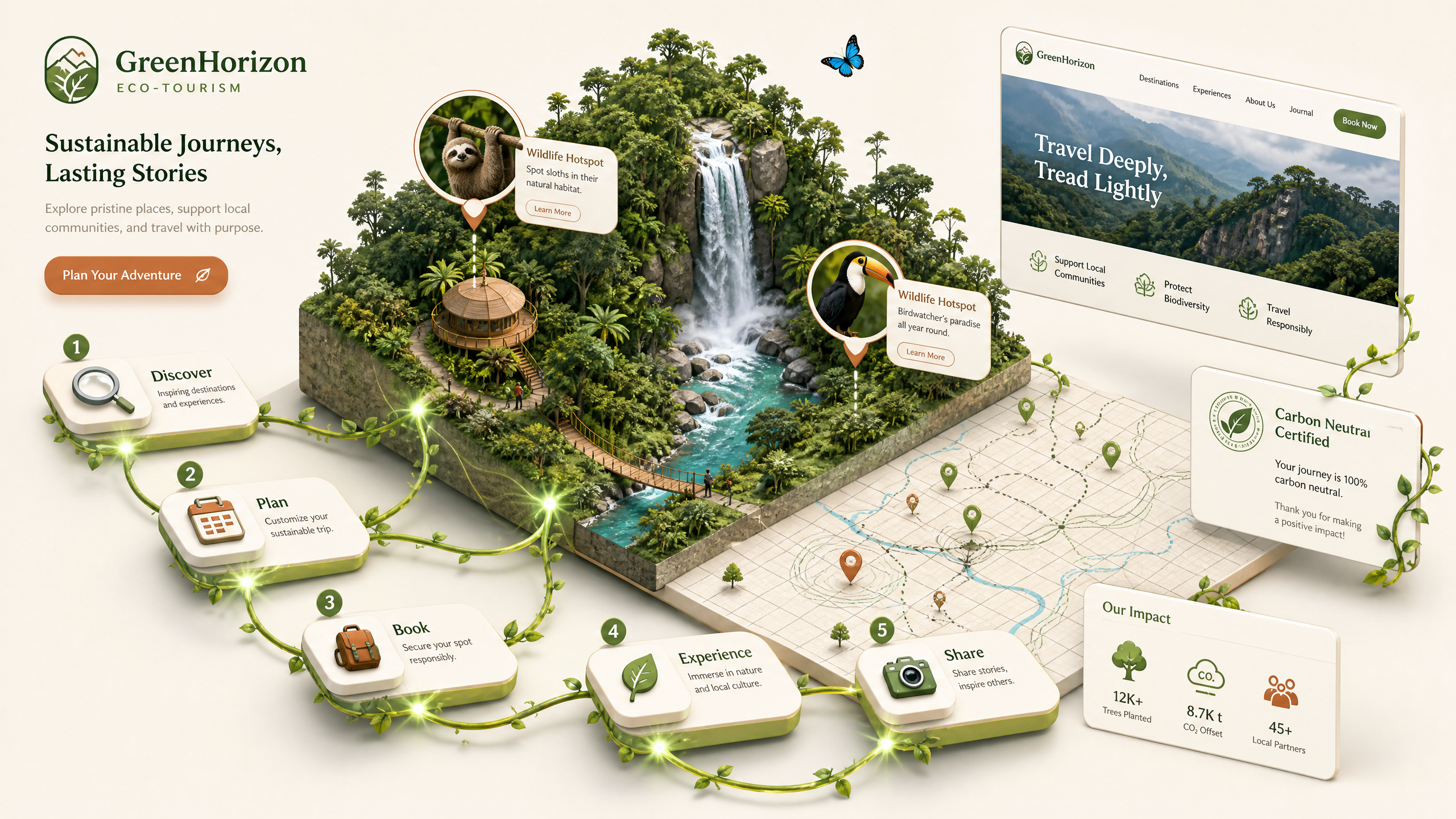
Crafting AI Websites for Eco-Tourism: Essential Design Steps
Creating an AI-powered website for eco-tourism isn’t just about aesthetics; it’s about crafting an engaging experience that inspires sustainable travel. In this guide, we'll outline the essential steps to design a website that connects eco-conscious travelers to unique destinations, using Draftly’s AI-driven tools.
Why Eco-Tourism Needs AI-Powered Websites
Eco-tourism thrives on storytelling, but static websites often fall short of capturing the immersive essence of nature. AI websites, particularly those built with Draftly, can:
!crafting ai websites for ecotourism essential design steps, tutorials
- Personalize content for visitors based on their preferences, such as wildlife tours or cultural experiences.
- Offer 3D interactive features, such as virtual trails or eco-lodges.
- Highlight sustainability metrics, like carbon offset data, in real-time dashboards.
Step 1: Define Your Eco-Tourism Goals
Before diving into design, clarify the purpose of your website. Are you promoting a specific destination, raising awareness about conservation, or driving bookings for eco-tours?
- Identify your audience: Are they adventure seekers, families, or solo travelers?
- Set measurable KPIs: For example, aim for a 20% increase in tour inquiries within six months.
- Map user journeys: Understand how visitors will navigate—from landing on the homepage to booking a tour.
Step 2: Prioritize Immersive Visuals
Eco-tourism is about inspiring wanderlust, and visuals play a pivotal role. Draftly's AI tools allow you to create:
- Cinematic scroll-driven experiences: Showcase panoramic views of destinations as users scroll.
- Interactive 3D maps: Highlight trails, lodges, and biodiversity hotspots.
- Before-and-after sliders: Demonstrate the impact of conservation efforts visually.
How to Add Immersive Features
- Use Draftly’s prompt-based builder to generate a 3D map of your destination.
- Customize the map by adding clickable points that reveal key information.
- Integrate high-quality drone footage or 360-degree tours.
Step 3: Embed Real-Time Sustainability Metrics
Travelers are increasingly eco-conscious, with 81% of global travelers wanting sustainable options. Your website should showcase how your eco-tourism initiative aligns with these values.
- Carbon footprint calculators: Let users measure the impact of their trip and offer offsetting options.
- Conservation stats: Display live data on species saved, trees planted, or waste reduced.
- Local community impact: Share how tourism benefits local economies, using dynamic infographics.
Step 4: Craft Compelling Storytelling Sections
Storytelling is at the heart of eco-tourism. Your website content should:
- Highlight local voices: Share testimonials from community members or eco-tourists.
- Integrate timelines: Use 3D interactive timelines to narrate conservation efforts.
- Showcase cause-and-effect: Illustrate how tourism directly supports sustainability projects.
How to Structure Storytelling Pages
- Begin with an emotional hook, like a visitor’s transformative experience.
- Use visuals to complement text—wildlife photos, videos, or animated infographics.
- End with a clear call-to-action, like “Book Your Eco-Friendly Adventure.”
Step 5: Optimize for Mobile and Accessibility
With 70% of travelers researching trips on mobile devices, your eco-tourism website must be mobile-friendly and accessible to all users.
- Responsive design: Ensure all elements adapt seamlessly to screens of any size.
- Fast loading times: Compress images and use Draftly’s optimization features.
- Accessibility tools: Include alt text, high-contrast modes, and screen reader compatibility.