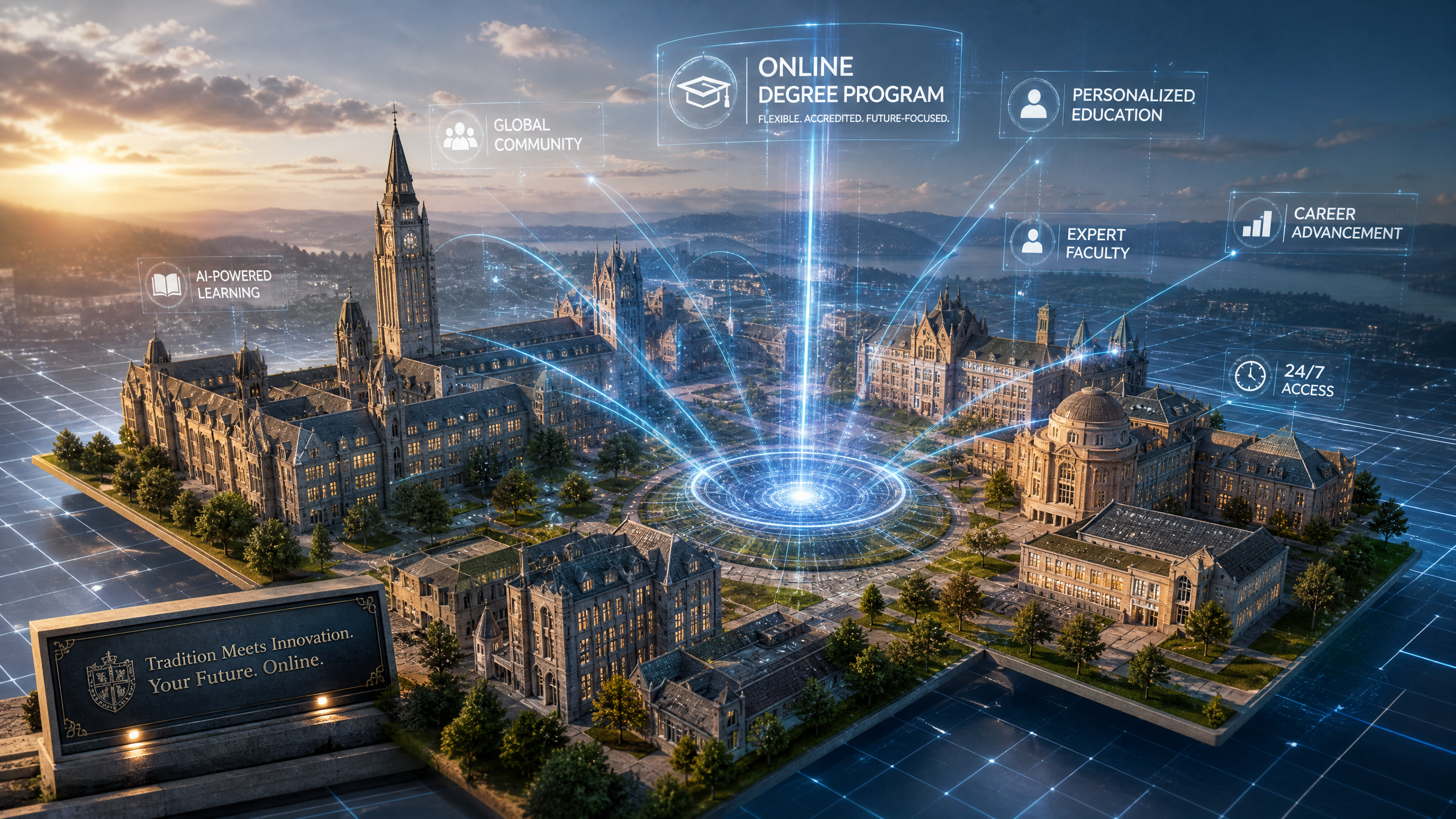
How 3D AI Websites Are Enabling Indian Higher Education Institutes to Market Online Degrees
Indian higher education institutes are rapidly shifting toward immersive digital experiences as 3D AI websites become the primary vehicle for marketing online degrees. With the EdTech market in India projected to reach $10.4 billion by 2025, universities are moving away from flat, text-heavy landing pages to compete for the attention of tech-savvy students who demand interactivity and visual depth. By integrating 3D AI website features into their admissions funnels, these institutions are seeing engagement rates climb as prospective learners explore virtual campus environments and interactive course structures before enrolling.
The Shift to Immersive Digital Admissions
Traditional brochures and static PDFs no longer satisfy the expectations of prospective students who have grown up with high-end gaming and interactive media. Indian universities are now using 3D AI-driven websites to bridge the gap between physical campus prestige and online degree accessibility. This shift is not just aesthetic; it is a data-backed strategy. Research suggests that interactive web experiences can increase time-on-site by over 120%, directly correlating to higher lead conversion rates for competitive degree programs.

- Universities can now showcase virtual labs and faculty workspaces in high-fidelity 3D
- Interactive enrollment flows guide students through complex degree requirements visually
- Virtual campus walkthroughs help remote students feel an authentic connection to the institution
Why 3D AI Websites Are Revolutionizing EdTech Marketing
For higher education, the biggest challenge is conveying the "value" of an online degree when the student is thousands of kilometers away. A 3D AI website solves this by providing a tangible sense of place. When a university uses Draftly Section Library to build modular, scroll-driven sections, they can present complex degree information as a cinematic narrative rather than a static list.
Building Trust in Virtual Learning
Trust is the currency of the education sector. Institutes that invest in high-end design signal quality and academic rigor. By employing Draftly Page Transitions and Section Animations, universities create a premium "digital campus" feeling that static competitors simply cannot match. This approach is particularly effective for attracting international students who rely on digital touchpoints to evaluate university credibility.
- Use immersive 3D hero sections to highlight campus life or successful alumni stories
- Integrate interactive 3D charts to demonstrate job placement percentages and salary growth
- Implement scroll-triggered animations to reveal academic modules, keeping the student engaged throughout the journey
Customization and Brand Identity
Every institution has a unique academic legacy. Using custom fonts, colors, and brand kits, universities ensure that their online degree portals feel like a natural extension of their physical presence. This brand consistency is vital for maintaining authority in the increasingly crowded Indian EdTech landscape.
Data-Driven Engagement for Online Degrees
Universities are moving beyond vanity metrics. By utilizing Draftly Analytics, admissions teams can track exactly how far a student scrolls through a 3D course description, identifying where interest drops off. This granular data allows for rapid iteration of marketing content, ensuring that the online degree pages are always optimized for current student preferences.
- Real-time heatmaps show which 3D elements attract the most clicks
- Conversion tracking reveals which degree program pages are underperforming
- AI-generated site insights help identify the most popular campus features for prospective students
The Competitive Edge for Indian Universities
As Google continues to prioritize user experience, how Google ranks websites has become inextricably linked to page engagement and core web vitals. A 3D AI website provides a seamless, fast, and highly interactive experience that search engines favor. For Indian institutes, this means better organic reach for their online degree programs without relying solely on expensive paid advertising campaigns.