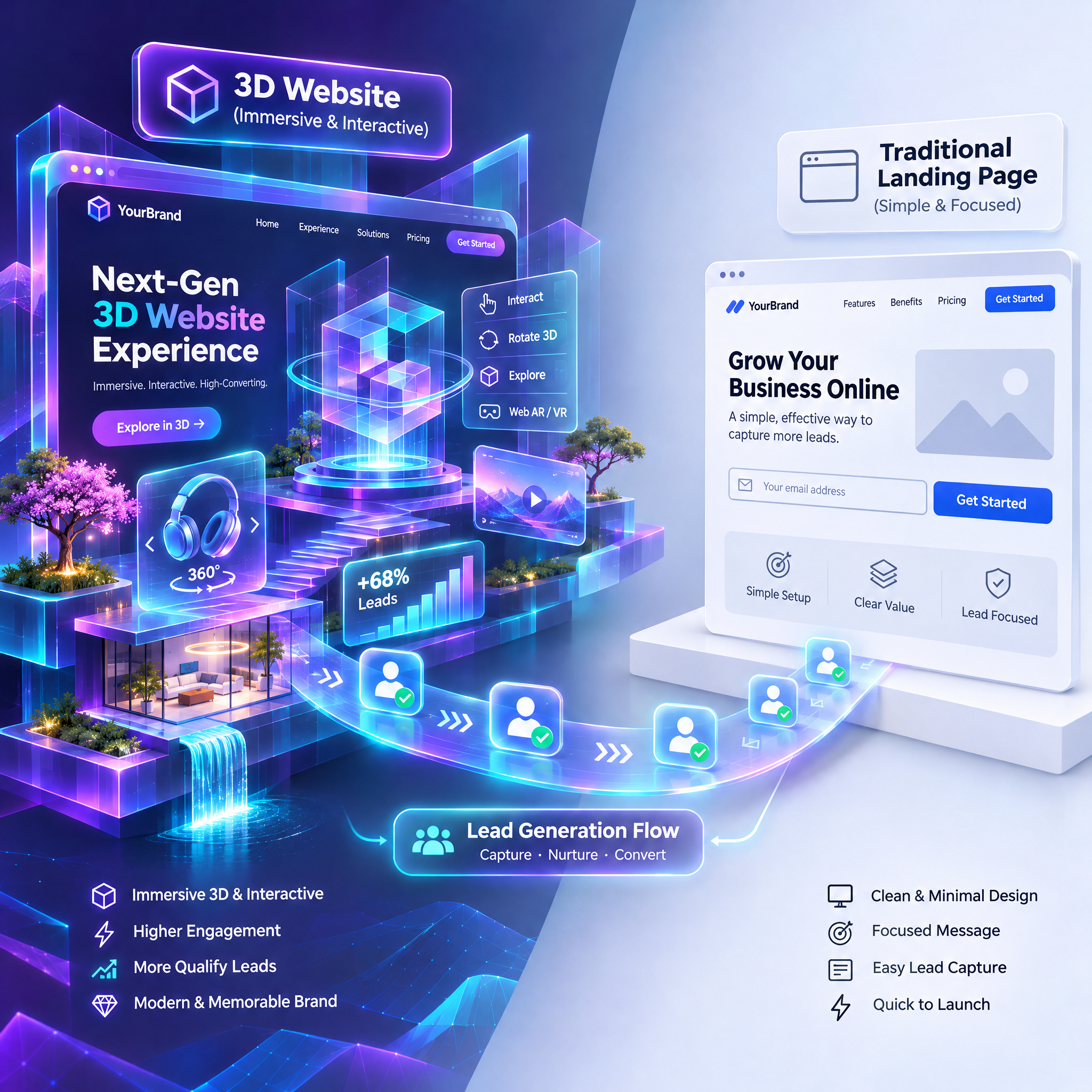
AI 3D Websites vs Traditional Landing Pages: Best for Lead Generation?
When it comes to converting visitors into leads, businesses have more options than ever. While traditional landing pages have long been a staple of digital marketing, AI-driven 3D websites are rapidly gaining traction. But which method is better for lead generation? This post dives into the differences, advantages, and disadvantages of both approaches to help you make the right choice.
What Are AI 3D Websites?
AI 3D websites are immersive, scroll-driven digital experiences built using advanced AI tools like Draftly. These websites break away from the static, linear design of traditional landing pages, offering interactive elements such as animations, dynamic transitions, and 3D visuals.
!ai 3d websites vs traditional landing pages best for lead generation, product
In comparison, traditional landing pages are typically single-page web designs focused on guiding visitors toward a specific call to action (CTA), such as signing up for a newsletter or purchasing a product.
How Do AI 3D Websites Perform in Lead Generation?
AI 3D websites elevate user engagement by creating unique, visually appealing experiences. Here’s why they stand out:
- Interactive storytelling: 3D websites leverage animations and scroll-based interactions to captivate users, keeping them engaged longer.
- Higher engagement metrics: Studies show that interactive design can boost time-on-page by up to 50%.
- Personalized experiences: AI tools like Draftly's advanced content blocks enable tailored content depending on user preferences.
Pros and Cons of AI 3D Websites
AI 3D websites offer groundbreaking features but aren't perfect for every business model. Here’s a breakdown:
Pros
- Enhanced engagement: Users are drawn to immersive designs and dynamic visuals, which can lead to higher conversion rates.
- Unique branding: 3D effects differentiate your business in competitive markets.
- Mobile optimization: Platforms like Draftly ensure smooth mobile experiences.
- Interactive lead forms: Embedded forms with animations add a layer of interactivity to lead capture.
Cons
- Higher cost: AI 3D websites often require more investment due to their complexity.
- Learning curve: Managing and customizing advanced tools may require additional training.
- Performance risks: Without proper site speed optimization, heavy designs can slow load times.
Pros and Cons of Traditional Landing Pages
Pros
- Ease of use: Simple designs and templates make landing pages accessible for small businesses.
- Cost-effective: Building and maintaining a basic landing page is significantly cheaper.
- Faster load times: Lightweight designs ensure quicker page loads, improving SEO and user experience.
- Proven formula: Decades of marketing data demonstrate their effectiveness in driving leads.
Cons
- Limited creativity: Traditional landing pages lack the immersive appeal of 3D designs.
- Lower engagement: Users may spend less time on static pages.
- Generic feel: It’s harder to stand out among competitors using similar layouts.
Which Is Better for Lead Generation?
The choice between AI 3D websites and traditional landing pages depends on your specific business goals, audience, and resources. Here’s a quick decision framework:
- Audience behavior: If your audience prefers quick, simple information, traditional landing pages may be more effective.
- Budget: AI 3D websites generally have a higher upfront cost; traditional pages might suit businesses with limited resources.
- Brand identity: If differentiation and visual appeal are key, 3D websites provide unparalleled options via Draftly's motion pass guide.
- Mobile-first strategy: Both options can be optimized for mobile, but AI 3D websites often perform better for interactive designs.
- Lead capture tools: For advanced forms and analytics, platforms like Draftly Forms integrate seamlessly with 3D designs.
Recommendation: Balance Creativity and Simplicity
For businesses in highly competitive markets or industries where storytelling matters (e.g., wellness or e-commerce), AI 3D websites are worth the investment. However, if simplicity and cost-effectiveness are priorities, traditional landing pages remain a solid option.
Whether you choose a 3D website or a traditional landing page, testing your site on mobile before launch is critical to optimize for lead generation.