Creating Virtual Tours with 3D AI Websites for Indian Museums
Indian museums are evolving rapidly as curators seek to bridge the gap between historical preservation and digital accessibility. By creating virtual tours with 3D AI websites, institutions can offer global access to India's vast cultural heritage, turning static collections into interactive, cinematic experiences that resonate with a modern audience. With over 60% of museum visitors now expecting a digital component before or after their visit, the demand for immersive storytelling is at an all-time high.
The Shift Toward Virtual Exhibits in India
Traditional digital presence for museums often relied on flat, static images that failed to capture the architectural grandeur or intricate detail of artifacts. 3D AI website builders change this by allowing curators to craft scroll-driven, cinematic environments that mimic the feeling of walking through a physical hall. This approach not only boosts engagement but also supports digital transformation in Indian libraries and cultural archives by providing a scalable framework for growth.

- Improved visitor retention rates through interactive, scroll-based storytelling.
- Global accessibility, allowing students in Tier 3 cities to explore national treasures.
- Reduced maintenance costs compared to physical exhibit expansions.
- Enhanced SEO visibility, helping museums rank for specific historical and cultural search intent.
Creating Immersive Virtual Tours with AI
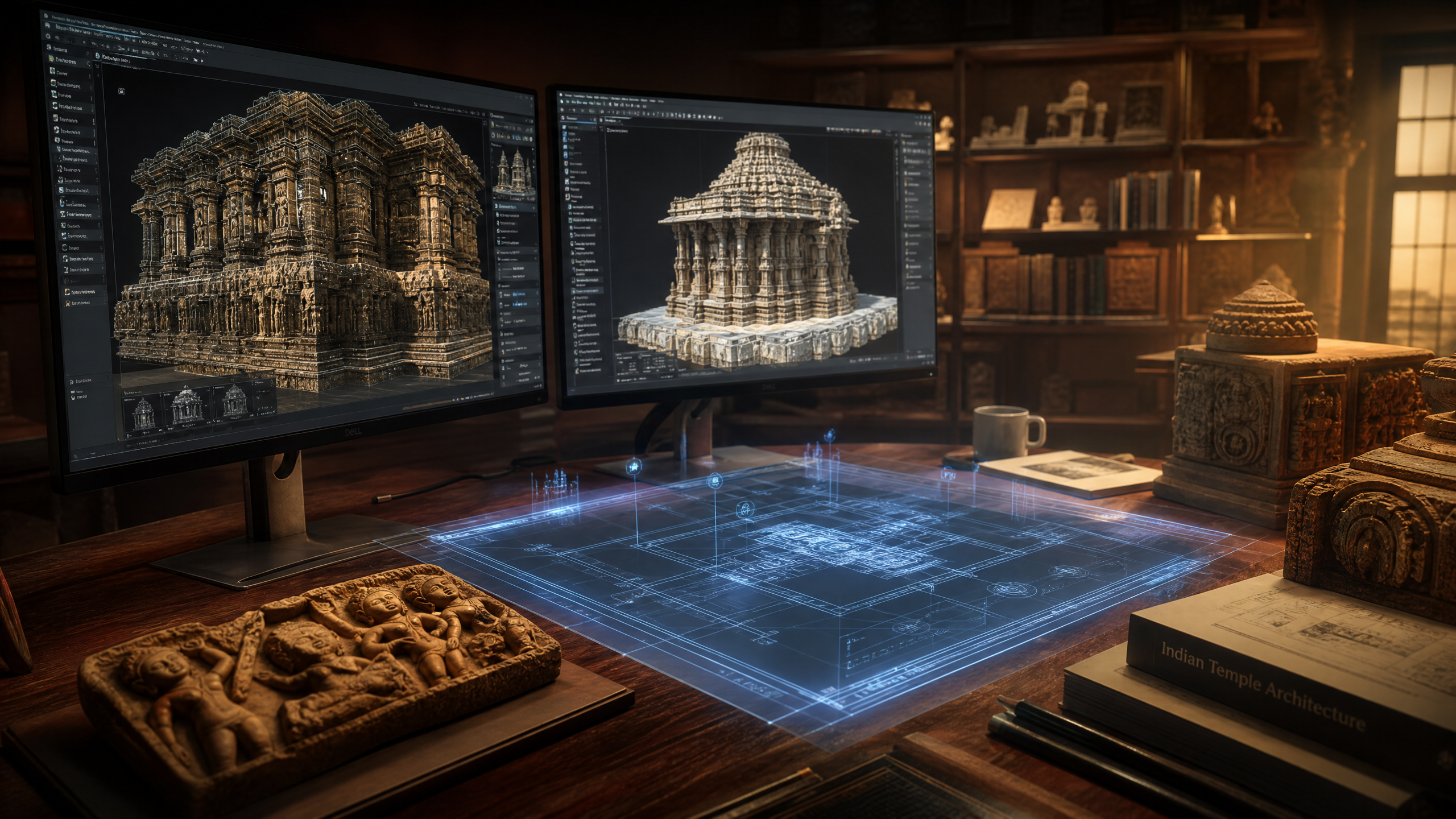
Implementing 3D technology no longer requires a dedicated team of developers or massive budgets. Modern AI builders allow institutions to upload 3D scans or high-quality photos and transform them into interactive spaces within hours. This efficiency is a massive upgrade for Indian cultural heritage initiatives looking to modernize their outreach.
Designing for Accessibility and Engagement
When building these tours, focus on the user journey. A seamless virtual experience should lead the visitor from the entrance to the most significant pieces in the collection without friction. Ensure your content is mobile-responsive, as nearly 75% of Indian web traffic originates from mobile devices. You can also enhance digital experiences for Indian museums by integrating descriptive audio guides that trigger as the user scrolls past specific sections.
- Curate a thematic path through your collection to maintain narrative flow.
- Utilize motion passes to guide the viewer's eye toward key details.
- Add interactive hotspots that reveal historical data or video interviews with experts.
Technical Considerations for Indian Museums
Speed and performance are critical when dealing with high-fidelity 3D assets. Indian museums must prioritize loading times to ensure that visitors on varying network conditions can still access the exhibits. Utilizing 3D website loading speed optimizations ensures that your digital gallery remains accessible without sacrificing the visual quality that makes 3D AI websites so compelling.
- Compress 3D assets and textures without losing visual fidelity.
- Implement lazy loading for images and heavy graphical elements.
- Use a content delivery network (CDN) to serve assets locally.
- Test performance across different browser types and hardware configurations.
Leveraging Analytics for Better Curation
Once your virtual tour is live, the data becomes your most valuable asset. Unlike a physical museum where tracking exact visitor behavior is difficult, 3D AI websites provide clear insights into which exhibits hold the most interest. By analyzing 3D AI website analytics tools for data-driven decisions, curators can optimize the layout of their physical and virtual galleries to highlight the pieces that drive the most engagement.
- Track which specific artifacts receive the most clicks or interaction time.
- Identify drop-off points in the virtual tour path to improve navigation.
- Segment traffic by location to understand the global impact of your exhibits.