Comparing 3D AI Tools to Traditional Web Design Platforms
Choosing the right web design platform can dramatically impact your brand’s digital presence. With 3D AI tools offering immersive, cinematic experiences and traditional platforms excelling in customization, which one is the better fit for your business?
What Are 3D AI Tools?
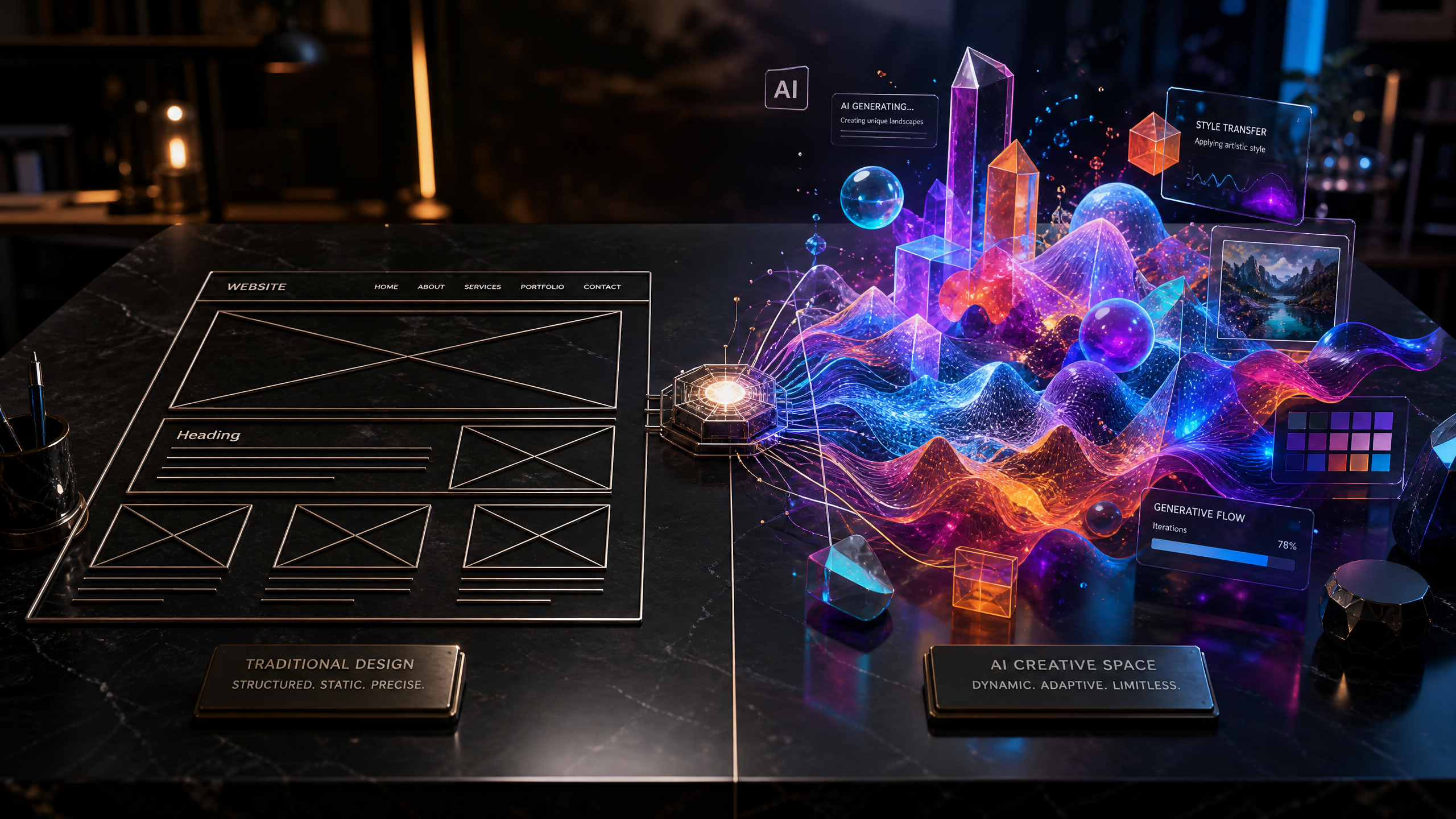
3D AI tools are platforms that use artificial intelligence to automatically generate visually dynamic websites with scroll-driven animations, interactive sections, and cinematic transitions. These tools simplify web creation by turning prompts into full-fledged immersive web experiences—like those seen in Draftly Page Transitions and Section Animations.
!comparing 3d ai tools to traditional web design platforms, product
Benefits of 3D AI Tools
- Speed: Generate complete websites in minutes using AI prompts.
- Engagement: Features like 3D effects and motion-driven pages keep users captivated.
- Accessibility: Often pre-equipped with AI-driven inclusivity features.
Limitations of 3D AI Tools
- Limited custom code export options, as explored in Exporting Custom Code From AI Website Builders.
- Potential over-reliance on templates for niche designs.
- Higher learning curve if you want advanced manual edits.
Traditional Web Design Platforms: A Proven Approach
Traditional platforms like WordPress and Adobe Dreamweaver have been the backbone of web design for years. They allow designers full control over every detail, from layout to code.
Advantages of Traditional Web Design
- Customization: Full control over HTML, CSS, and JavaScript for unique designs.
- Flexibility: Ideal for complex sites requiring specific functionalities.
- Scalability: Supports websites with thousands of pages or intricate databases.
Drawbacks of Traditional Platforms
- Time-consuming: Building a website manually can take weeks or months.
- Technical expertise required: You’ll likely need coding knowledge or hire a developer.
- Lack of built-in motion effects: Requires additional plugins or custom development for interactivity.
Comparing Key Features
| Feature | 3D AI Tools | Traditional Platforms |
|---|---|---|
| Ease of Use | Simplified AI-driven design | Requires technical skills |
| Customization | Moderate | High |
| Speed | Instant | Slow |
| Cost | Affordable | Variable (can be expensive) |
| Engagement Potential | High (dynamic visuals) | Moderate |
Which Should You Choose?
When to Choose 3D AI Tools
If your business relies on interactive storytelling, immersive visuals, or cinematic transitions, 3D AI tools are the clear winner. They’re ideal for industries like:
- Education: Create immersive campus tours (How to Design Immersive 3D Campus Tour Pages).
- E-commerce: Drive engagement with dynamic product pages (Draftly E-Commerce Product Pages).
- Tourism: Build interactive maps (How 3D Interactive Maps Transform Tour Websites).
When to Opt for Traditional Platforms
Traditional platforms are better suited for businesses requiring complex customizations, such as multi-page sites or integrations with databases. Examples include:
- Corporate websites: Hosting extensive resources or legal documents.
- Large-scale blogs: Managing hundreds of articles (Setting Up a Blog on Your Draftly Site).
- Data-driven platforms: Sites with intricate backend systems.
Final Recommendation
For most businesses aiming to captivate their audience through motion-driven stories, 3D AI tools offer an unbeatable advantage. Platforms like Draftly enable you to create cinematic experiences without coding, saving time while enhancing user engagement. However, if your project demands heavy backend integrations or ultra-specific control, traditional platforms may still be the better option.