Leveraging 3D AI for Renewable Energy Projects in Rural India
For rural India, the transition to sustainable power is no longer a distant theoretical goal but a tangible development shift. Startups deploying micro-grids and solar solutions face a unique hurdle: communicating high-tech energy infrastructure to communities where digital literacy and trust in new systems vary. Leveraging 3D AI for renewable energy projects allows these enterprises to bridge the gap between complex engineering and local understanding through immersive, scroll-driven storytelling.
Transforming Complex Energy Data with 3D AI
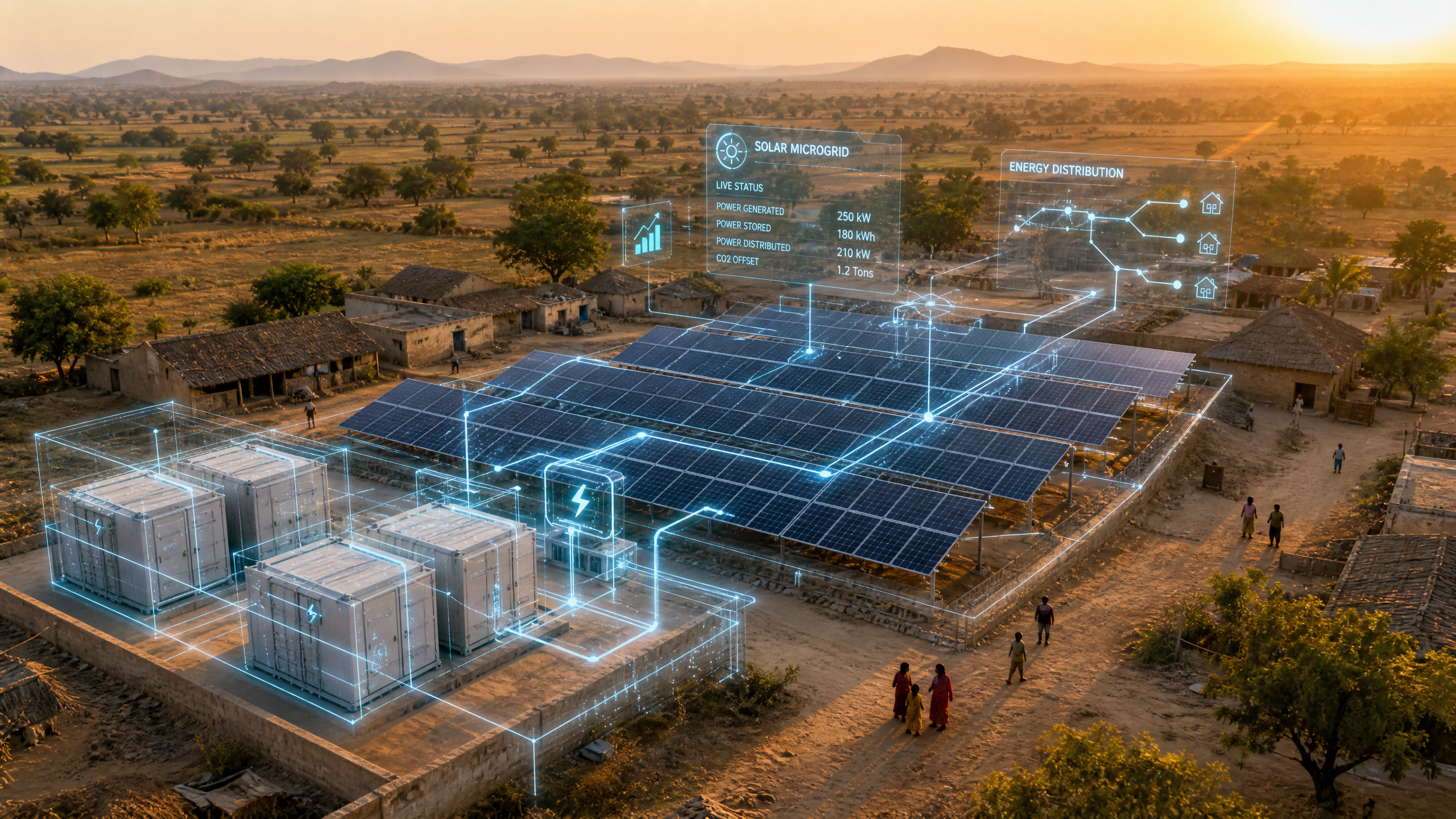
Traditional static websites often fail to convey the scale or reliability of a solar installation to local panchayats or potential investors. By utilizing 3D AI websites, energy startups can visualize how a rural micro-grid functions in real-time, mapping power distribution across a village landscape. This level of visual transparency is essential for gaining community buy-in and demonstrating project viability to government bodies.
!leveraging 3d ai for renewable energy projects in rural india, industry
- Visualizing energy output: Use 3D models to show exactly how much power a solar array generates during peak daylight.
- Interactive maps: Allow stakeholders to click on specific nodes in a village grid to see load-balancing in action.
- Trust-building: Immersive experiences reduce the perceived risk of new technologies, which is a common barrier in rural adoption.
Driving Investment with Immersive Impact Reports
Funding for renewable energy in rural sectors relies heavily on clear, data-backed impact reporting. Instead of dense PDFs, forward-thinking firms are harnessing 3D AI websites to present their annual impact metrics. These sites allow donors and impact investors to scroll through a 3D timeline of installation progress, seeing how energy access correlates with increased school attendance or extended evening business hours in local markets.
Scaling Digital Outreach in Rural Areas
Data indicates that over 75% of rural internet users in India access the web via mobile devices. Building a site that is both high-performance and visually stunning is critical. How to optimise images and assets for these users ensures that the high-fidelity 3D experience does not become a barrier to entry. When your site loads quickly on 4G networks, you ensure that the message of sustainable development reaches the people who need it most.
- Start with a mobile-first 3D hero section that highlights the immediate benefit of the energy project.
- Use lightweight interactive components that respond to touch rather than just mouse-hover interactions.
- Integrate local language support to ensure that the interface feels accessible to native speakers.
Bridging the Trust Gap for Solar Startups
Renewable energy firms must often prove their reliability before they can scale. By implementing 3D AI website features, these companies can provide virtual "proof-of-concept" tours that showcase the durability of hardware in varied Indian climates—from the heat of Rajasthan to the humidity of the Northeast. This proactive disclosure of technical capability builds a massive trust advantage over competitors relying on traditional, text-heavy marketing.
- Real-time performance dashboards: Integrate live data feeds to show that the system is currently operational.
- Testimonial integration: Use 3D video cards to feature local business owners who have successfully transitioned to solar power.
- Scalability visualization: Show how a system can expand from powering a single shop to an entire village block.