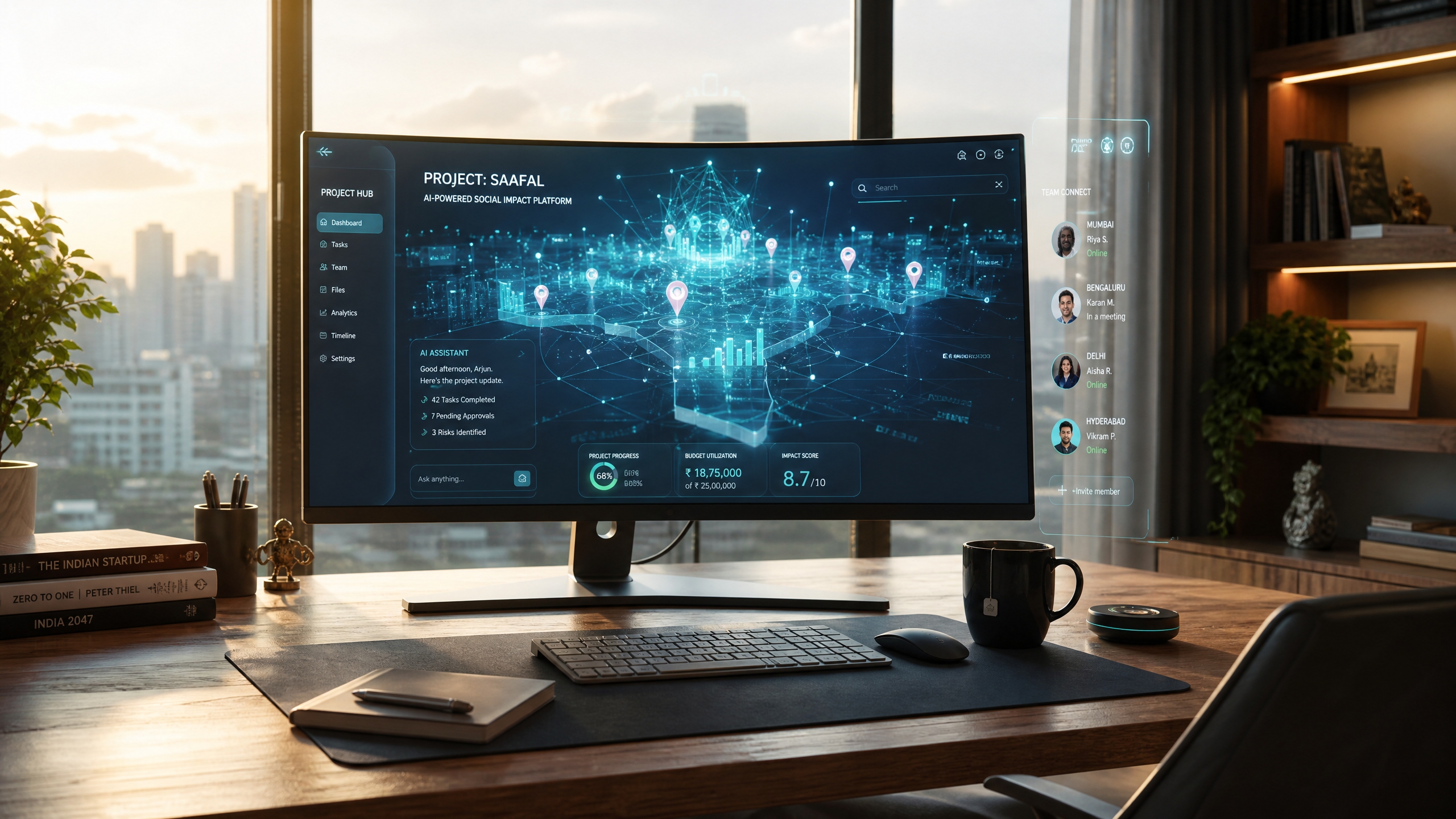
How AI Websites Enhance Collaboration for Indian Remote Teams
For Indian remote teams, the digital workspace is often fragmented across endless tabs and disconnected project management tools. As businesses scale, the ability to centralize communication becomes a competitive advantage. By leveraging 3D AI websites, distributed teams across cities like Bengaluru, Pune, and Gurugram can create a unified, immersive hub that transforms how they collaborate, share assets, and visualize progress in real-time.
The Shift to Immersive Digital Workspaces
Traditional static websites no longer serve the high-velocity needs of Indian SaaS and service-based startups. When teams work across different time zones or remote setups, the lack of a 'physical' office leads to communication silos. An AI-powered 3D website acts as a virtual headquarters where project updates, team documentation, and client deliverables exist in a single, cohesive space.
!how ai websites enhance collaboration for indian remote teams, industry
- Improved visibility: Teams can access live project dashboards that update automatically.
- Reduced friction: Centralizing assets eliminates the need for endless email threads.
- Enhanced engagement: Interactive elements make onboarding new hires significantly faster.
Driving Efficiency with 3D AI Features
Collaboration thrives when everyone works from the same source of truth. Integrating interactive 3D AI websites allows teams to visualize complex data architectures or project roadmaps without needing a dedicated design team. These platforms allow for rapid iteration, meaning team leads can update website content via simple conversational prompts rather than waiting for developers to push code.
Breaking Down Communication Silos
One of the primary challenges for Indian remote teams is the 'context gap' that occurs when information is buried in Slack or WhatsApp. By building a 3D AI website that serves as an internal portal, teams can:
- Map out project dependencies visually to prevent bottlenecks.
- Enable real-time feedback loops directly on the site interface.
- Maintain a persistent visual record of design iterations and client feedback.
Scalability for Growing Teams
As teams grow from 10 to 100 employees, keeping everyone aligned is difficult. Using Draftly Section Library allows teams to deploy new internal tools or resource pages in minutes. This modular approach ensures that as your company adds new departments, your digital workspace evolves with you, keeping the team focused on execution rather than maintenance.
Bridging the Gap Between Design and Development
In many Indian startups, the gap between what a product manager envisions and what a developer builds is wide. AI websites bridge this by allowing non-technical stakeholders to modify the site interface. This democratizes the design process, allowing product managers, sales leads, and even HR teams to contribute to the website's structure without requiring deep coding knowledge.
- Faster feedback cycles: Stakeholders see changes in real-time.
- Reduced dependency: Marketing teams can update landing pages independently.
- Enhanced consistency: AI tools ensure that brand guidelines remain intact across all pages.
The Future of Remote Collaboration
Remote collaboration is moving beyond simple video calls and chat apps. The next frontier involves creating persistent environments where work is visible, accessible, and interactive. By adopting AI-driven web technologies, Indian teams are not just building websites; they are building more resilient, transparent, and efficient organizational structures that thrive regardless of where team members are located.