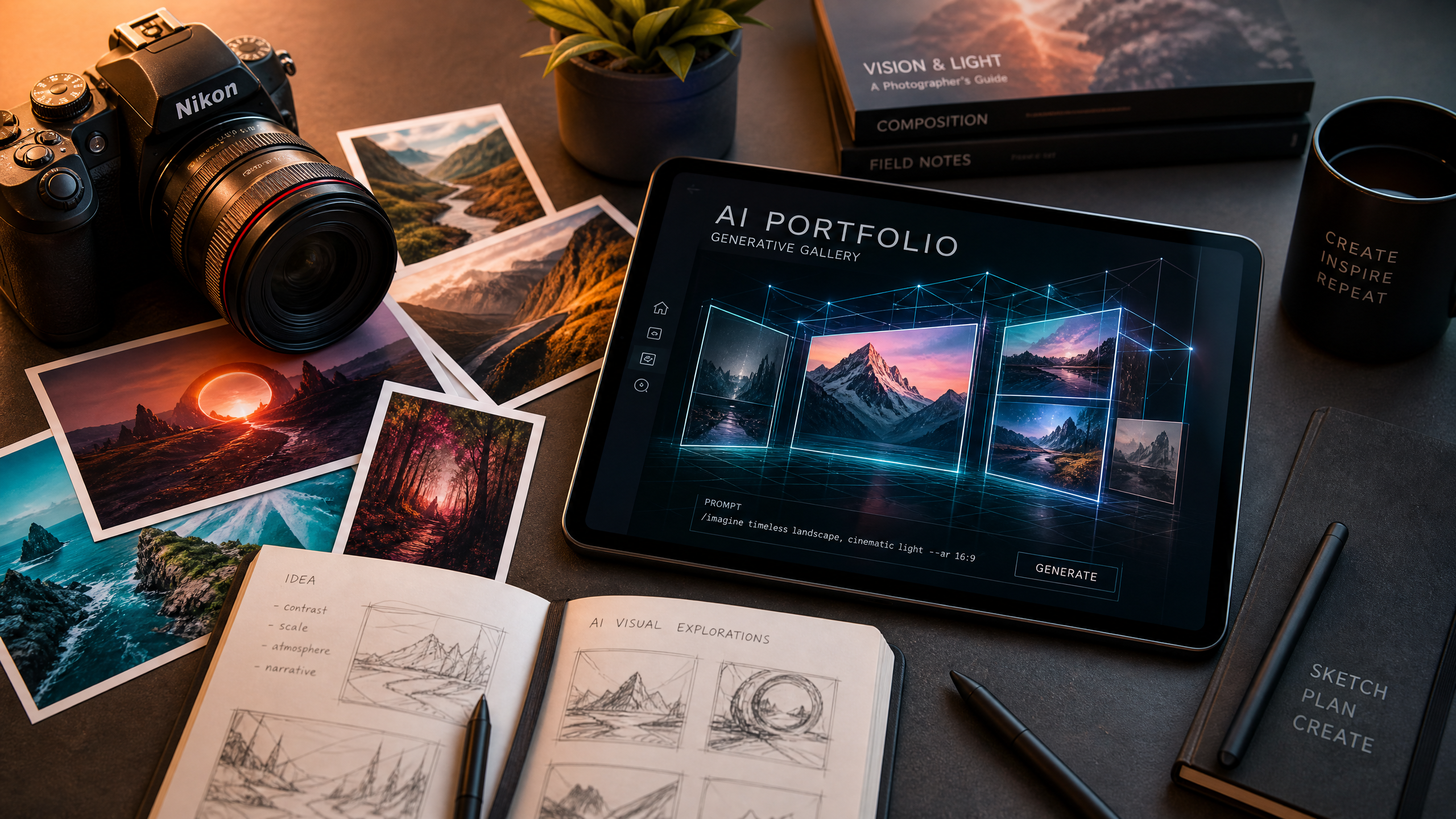
AI-powered Portfolios: A Game-Changer for Emerging Fine Art Photographers
Emerging fine art photographers often face a significant challenge: standing out in a saturated market while showcasing their unique vision. With traditional portfolios being static and limited, AI-powered portfolios are rewriting the rulebook by offering dynamic and immersive ways to present photography. These cutting-edge tools are proving to be the ultimate game-changer, helping artists build global recognition, save time, and focus on their craft.
Why AI-powered Portfolios Matter to Fine Art Photographers
For fine art photographers, a portfolio is more than a collection of images—it’s a visual story that defines their artistic identity. AI-powered portfolios are uniquely positioned to elevate this storytelling.
!aipowered portfolios a gamechanger for emerging fine art photographers, industry
- Dynamic Presentations: Static galleries often fail to capture the depth of a photographer’s work. AI-driven platforms like Draftly create cinematic, scroll-driven websites that immerse viewers in the artist's narrative.
- Automation of Design: Photographers spend an average of 15–20 hours designing and updating their portfolios. AI eliminates this time sink, producing professional-grade layouts in minutes.
- Global Reach: Fine art photography is a niche market, yet AI portfolios optimize for search engines, enabling photographers to showcase their work to international clients seamlessly.
The Technology Behind AI-Powered Portfolios
How AI Creates Cinematic Experiences
AI-powered portfolios go beyond conventional designs by integrating 3D visuals, virtual tours, and scroll-based storytelling. This technology helps fine art photographers encapsulate their work in interactive formats.
- AI-enhanced imagery transitions: AI tools ensure smooth, high-definition transitions between images, maintaining viewer engagement.
- Scroll-driven narratives: AI designs websites where storytelling unfolds as the user scrolls, mimicking the experience of a gallery walkthrough.
- Virtual viewing rooms: Some AI platforms integrate virtual gallery spaces, allowing photographers to simulate exhibitions online.
SEO Optimization for Visibility
AI portfolios aren’t just visually appealing; they’re built to rank. By automating search engine optimization (SEO), these platforms ensure photographers attract the right audience. Key features include:
- Keyword integration: AI analyzes top-performing keywords in photography niches.
- Image metadata generation: Optimizing photo descriptions and alt text for better visibility.
- Performance tracking: AI offers analytics tools to measure engagement—a feature explored in A Deep Dive into 3D AI Website Analytics Tools for Data-driven Decisions.
Benefits for Emerging Fine Art Photographers
Cost-Effective Solutions
Traditional portfolio-building costs can range from $500 to $5,000, depending on complexity. AI-powered platforms drastically reduce these costs by automating design and updates. Emerging photographers can now launch stunning portfolios for as little as $50 per month.
Time-Saving Design
Time is a scarce resource for artists focused on crafting their next masterpiece. With AI, photographers can build or refresh their portfolios in under an hour. Compare this with the average 15+ hours spent on manual design.
Enhanced Storytelling
Fine art photography thrives on emotional connection. AI tools amplify storytelling by integrating interactive elements, such as hover effects and smooth zoom-ins, to engage viewers. These features also benefit industries like Indian Eco-Product Retail Websites that rely on visual appeal.
Overcoming Barriers with AI Portfolios
Emerging photographers often struggle with technical limitations, market competition, and accessibility. AI-powered portfolios address these head-on:
- Technical Ease: No coding required; AI handles all backend complexities.
- Competitive Edge: Unique features like cinematic scrolling set AI portfolios apart from generic templates.
- Accessibility: Mobile-friendly designs ensure portfolios are accessible across devices, catering to diverse audiences.


