Integrating 3D AI Websites with Indian Rural Healthcare Systems
Integrating 3D AI websites with Indian rural healthcare systems creates a vital digital bridge for communities where traditional outreach often fails. With over 65% of India’s population residing in rural areas, the disparity in specialized medical access remains a critical barrier. By leveraging immersive, scroll-driven web experiences, healthcare providers can simplify complex medical guidance, making critical information accessible to users regardless of their technical proficiency or literacy levels.
The Role of Immersive Design in Rural Health
Rural healthcare infrastructure often struggles with communication gaps between local health workers and patients. Traditional static websites fail to capture attention or convey urgent health information effectively. Immersive, 3D-driven platforms allow for a cinematic storytelling approach that guides users through essential health journeys—from maternal care to chronic disease management—without requiring them to navigate complex menus.

Research indicates that visual-first platforms increase information retention rates by up to 40% among rural demographics compared to text-heavy portals. By utilizing Draftly's intuitive design blocks, NGOs and government health initiatives can deploy sites that function smoothly even on low-bandwidth mobile networks, ensuring that accessibility is not compromised by visual richness.
- Visual, scroll-driven narratives reduce cognitive load for users with limited digital experience.
- Interactive maps can help patients locate the nearest community health initiatives or diagnostic centers.
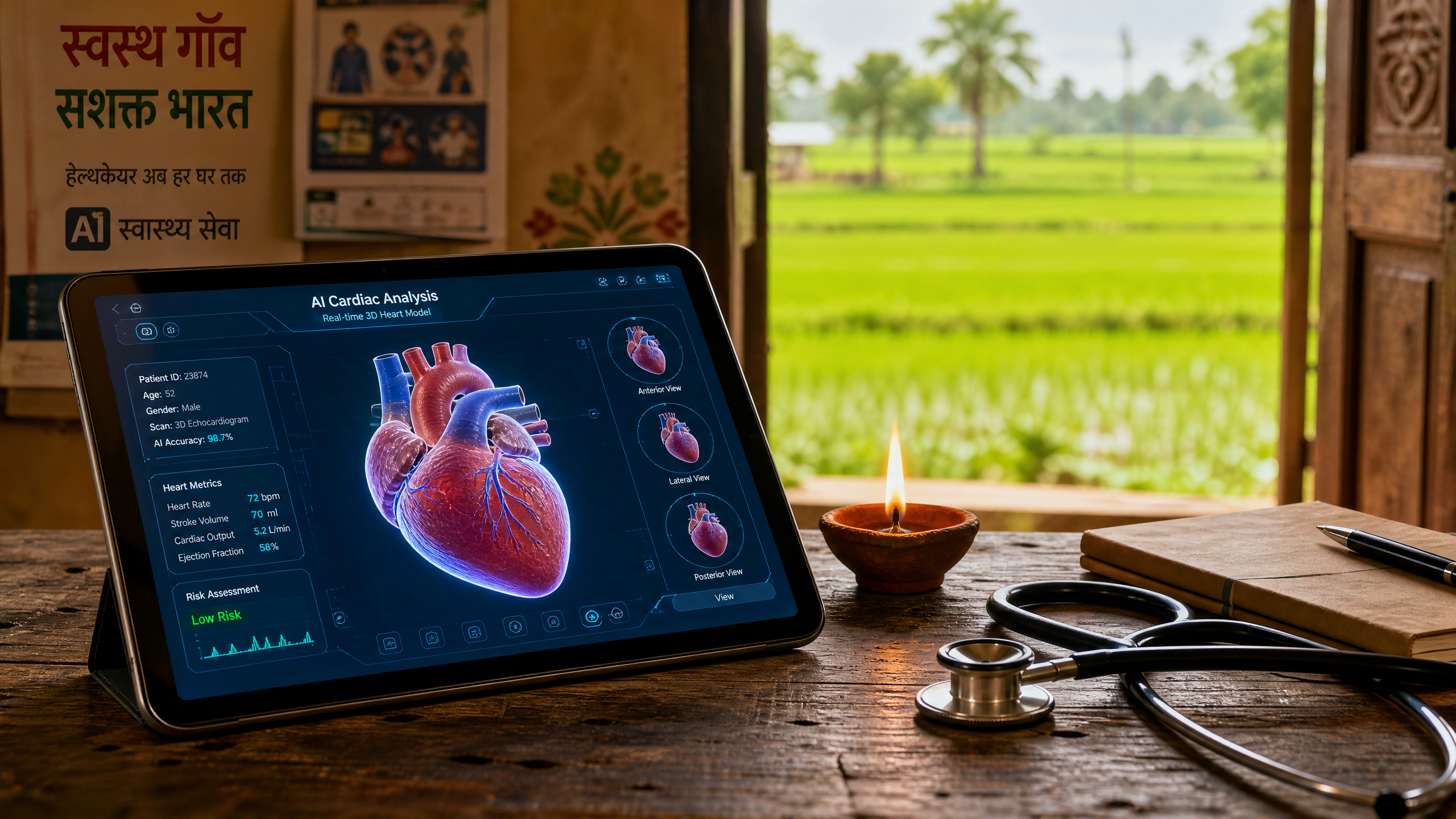
- AI-generated 3D visuals provide clear, language-agnostic explanations for complex medical procedures.
Overcoming Barriers to Digital Adoption
Building a website for rural users requires a departure from standard urban design patterns. The primary challenge is not just connectivity, but trust and clarity. An AI-powered 3D site can replace intimidating forms with conversational, interactive interfaces that feel more like a local health consultation than a cold digital registry.
Designing for Low-Connectivity Environments
Optimizing for rural India means prioritizing performance. While 3D websites sound data-intensive, modern AI-driven builders allow for high-impact visual storytelling that remains lightweight. By using image optimization best practices and efficient rendering, health platforms can ensure that a patient in a remote village sees a professional, trustworthy, and fast-loading portal.
- Use AI-generated imagery to create localized, culturally relevant health representations.
- Implement scroll-triggered animations to reveal health information incrementally, preventing information overload.
- Integrate simple, one-tap connection tools like WhatsApp to keep the patient-provider feedback loop open.
Scaling Impact with Scalable Web Infrastructure
For social enterprises, the goal is to scale impact without inflating operational costs. Using an AI-first builder allows these organizations to deliver professional, enterprise-grade healthcare platforms at a fraction of the cost of traditional development. When organizations leverage 3D AI websites for health campaigns, they aren't just creating a webpage; they are building a persistent, evolving digital health asset.
- Automated lead capture forms can help health workers track patient follow-ups efficiently.
- Dynamic pricing or service pages can be updated in real-time as local health schemes evolve.
- Centralized dashboards allow health administrators to monitor which health topics are receiving the most engagement.
Bridging the Digital Divide with 3D Technology
Technology is only as useful as its adoption rate. By focusing on human-centric design, health organizations can ensure their websites become a daily resource for rural families. Whether it is an interactive 3D portal for patient education or a directory of local health workers, these sites provide a sense of agency to communities that have historically been excluded from the digital health revolution.