How Indian Adventure Sports Enterprises Benefit from 3D AI Websites
For most Indian adventure sports enterprises, the primary challenge isn't the quality of the thrill—it's the digital delivery of that experience. When a potential customer lands on a static, text-heavy page, the adrenaline of bungee jumping or white-water rafting gets lost in translation. In 2026, forward-thinking operators are leveraging 3D AI websites to bridge the gap between initial discovery and final booking, turning browsers into participants before they even leave the landing page.
The Digital Bottleneck in Adventure Tourism
Traditional web design forces adventure operators to rely on flat images and long paragraphs to explain why a trek in the Himalayas or a scuba dive in the Andamans is worth the price. Research shows that 68% of users drop off within the first 10 seconds if a site fails to convey the unique value proposition immediately. For high-ticket adventure experiences, static pages lack the immersion required to justify premium pricing.

- Static imagery fails to capture the kinetic energy of extreme sports
- High bounce rates correlate directly with lack of interactive content
- Traditional booking flows create friction for mobile-first Indian users
Transforming Engagement with 3D Immersive Design
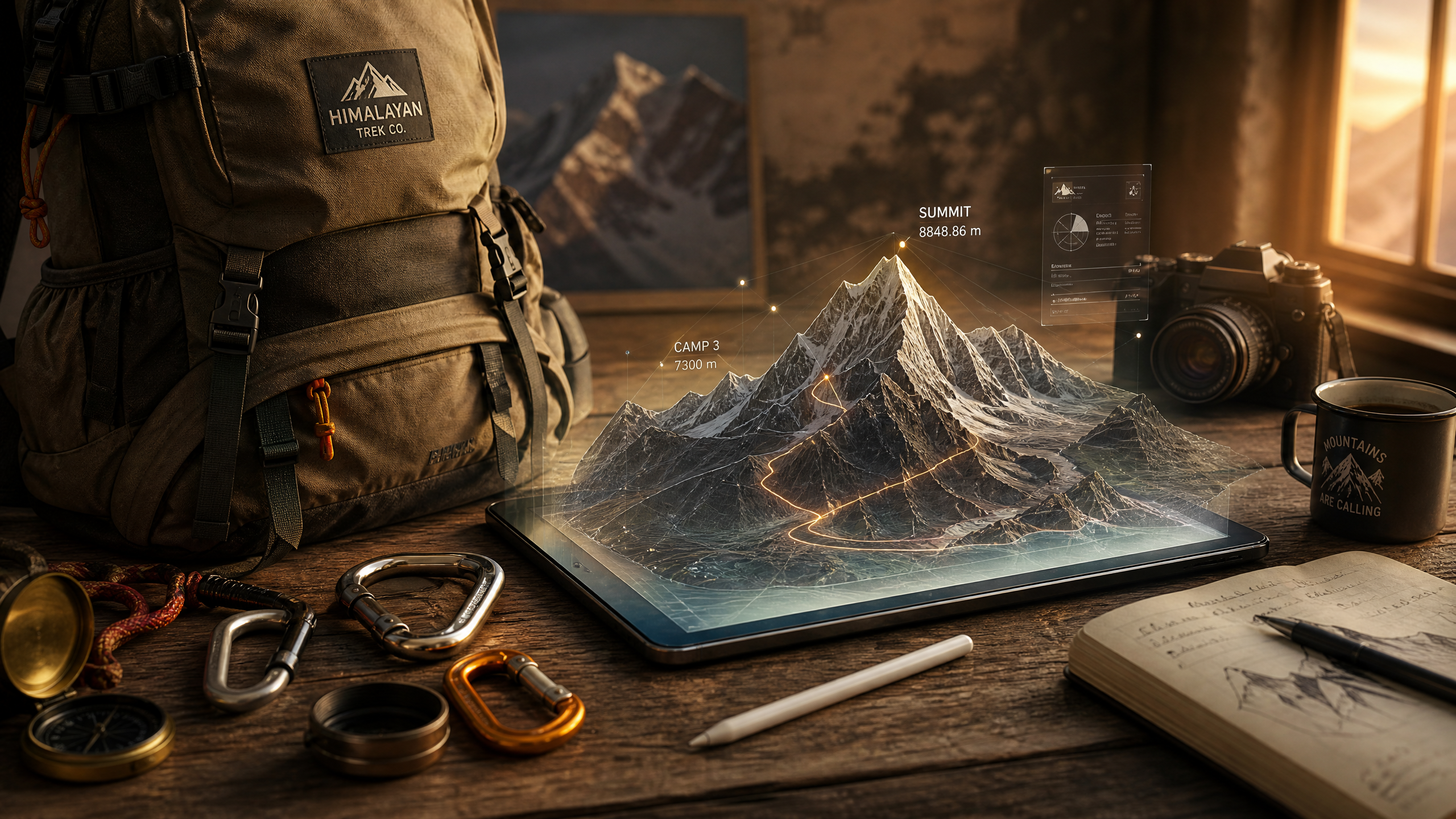
Adventure sports are inherently visual and experiential. A 3D AI website allows these businesses to showcase their terrain in a way that feels tangible. Instead of just reading about a rock-climbing route, a user can manipulate a 3D model of the cliff face, view weather-dependent difficulty levels, and visualize the descent.
Why 3D Visualization Drives Higher Conversion
- Emotional Connection: Interactive 3D maps allow users to "walk" through the experience, building anticipation and emotional buy-in.
- Reduced Cognitive Load: Complex itineraries become intuitive when presented through 3D animated dashboards, allowing users to filter by difficulty, duration, and equipment.
- Trust Building: Seeing a 3D breakdown of safety equipment or guided paths instills confidence that flat, generic copy cannot replicate.
Scaling Operations with AI-Driven Efficiency
Beyond aesthetics, the integration of AI-built sites streamlines operational overhead. Adventure sports businesses often struggle with managing bookings, gear rentals, and safety waivers. A 3D AI website doesn't just look good; it functions as a central business hub. By utilizing Draftly's section library, operators can quickly deploy lead capture forms that are both visually integrated into the 3D scene and technically optimized for conversion.
- Automated booking calendars sync directly with guide availability
- Dynamic pricing modules update based on peak season demand
- Built-in lead dashboards track every inquiry from initial click to post-trip feedback
Future-Proofing the Adventure Tourism Sector
As the Indian adventure tourism market grows at an estimated CAGR of 15% through 2030, the digital divide will separate the market leaders from the rest. Operators who cling to legacy website structures will find it increasingly difficult to compete with those offering a premium, immersive digital journey.
Strategic Implementation Steps
- Audit Your Current UX: Identify where users drop off during the booking flow and replace those static steps with 3D interactive elements.
- Leverage AI for Content: Use AI-generated copy to describe terrains and experiences in a way that matches your brand voice without requiring hours of manual writing.
- Prioritize Performance: Ensure your 3D assets are optimized for mobile, as the majority of your traffic will originate from social media platforms on mobile devices.