Architecture Firms Using 3D Websites to Win Bigger Projects
Architecture is a profession where the quality of work is self-evident — once built. The commercial problem every architecture firm faces is that clients must make multi-million dollar commitments based on what a firm has done before, not what they will do next. The website is where that evaluation happens, and most architecture firm websites are catastrophically underselling their own capabilities.
The global architecture services market was valued at $357 billion in 2023 and is growing at a compound annual rate of 5.8% (Grand View Research). Competition for premium projects — commercial developments, luxury residential, institutional commissions — is intensifying as talent becomes more globally mobile and client expectations for digital presentation rise sharply.
In this environment, the architecture firms winning the largest projects share a consistent competitive advantage: their websites communicate spatial intelligence, not just past work. They are built in three dimensions, because their work exists in three dimensions.
The RFP Shortlist Problem
Every significant architecture commission begins with an RFP process. A development company, a government body, or an institutional client issues a brief, receives submissions from multiple firms, and shortlists three to five for deeper engagement. Getting on that shortlist is where most project relationships are won or lost — and increasingly, shortlisting decisions are made online before a single meeting occurs.
A 2024 survey of commercial property developers by Architizer found that 79% of project owners research architecture firms online before issuing invitations to tender, and 61% say that a firm's website quality is one of the top three factors influencing whether they are shortlisted.
The implication is stark: a firm with superior technical capability and a mediocre website will lose shortlist positions to a firm with equivalent capability and an exceptional digital presence. The website is not a marketing afterthought — it is a primary business development asset.
What Architecture Clients Are Actually Evaluating
When a property developer or institutional client visits an architecture firm's website, they are not simply browsing a portfolio. They are running a parallel assessment process:
Technical Competence Signals
Can this firm handle complexity at the scale of our project? A 3D website that demonstrates mastery of spatial relationships, structural logic, and environmental design signals technical depth that a flat photo portfolio cannot. Firms that present their work in navigable 3D — showing structural systems, facade details, interior-exterior relationships — are communicating technical literacy at the medium level, not just the content level.
Project Similarity Assessment
Clients commissioning a mixed-use development want evidence that the firm has solved similar problems before. A 3D project showcase that allows filtering by typology, scale, material palette, and complexity enables self-directed research that is far more efficient and persuasive than a generic portfolio grid.
Cultural and Aesthetic Alignment
Architecture clients choosing between shortlisted firms are ultimately making a cultural choice: whose sensibility matches ours? A website that expresses the firm's design philosophy through its own spatial and visual language — rather than defaulting to a generic professional services template — communicates cultural identity powerfully.
Team and Expertise Depth
For larger commissions, clients need confidence that the senior talent they meet during business development is the talent who will actually work on their project. Detailed team profiles with project attribution, where specific team members are linked to specific project outcomes, build a narrative of expert depth that generic "our team" pages cannot.
Three 3D Website Strategies for Architecture Firms
Strategy 1: The Project Deep Dive
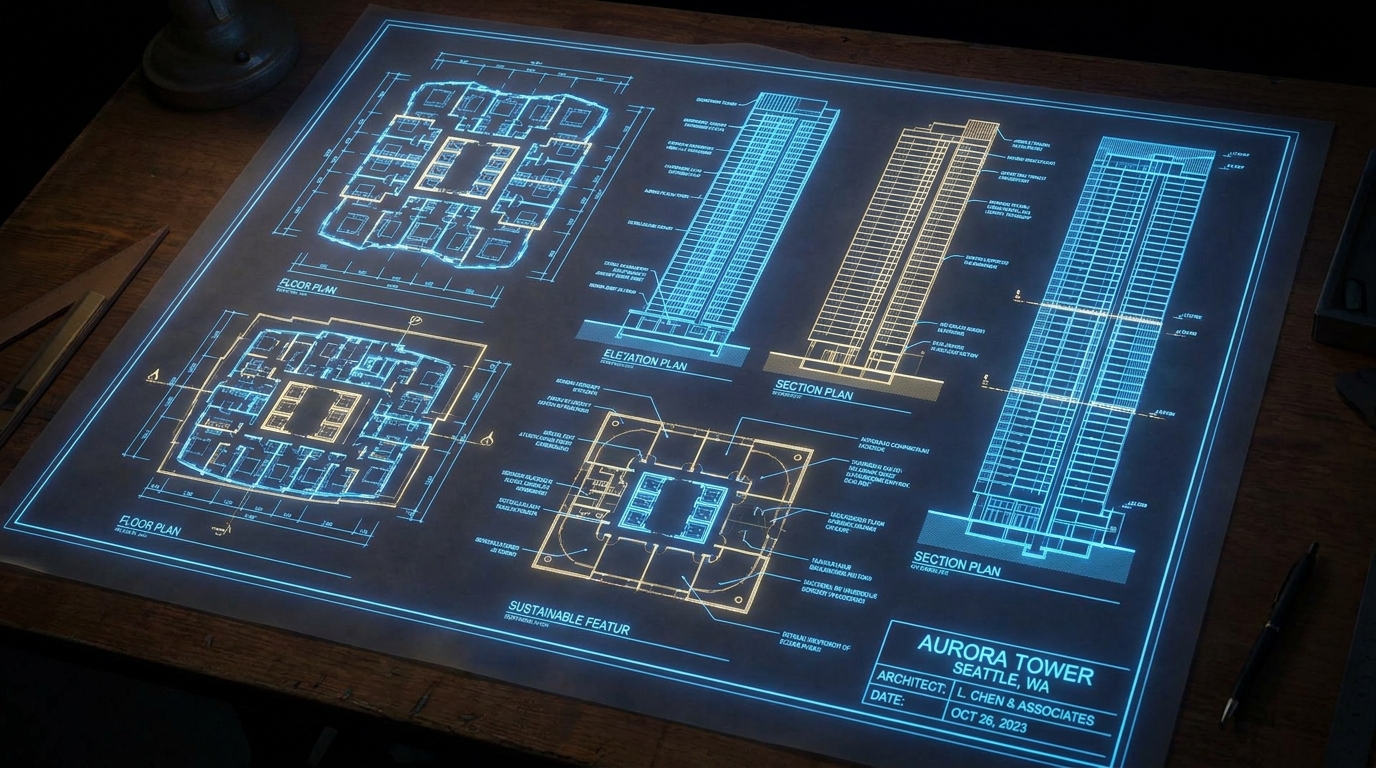
Rather than forty shallow portfolio entries, build twenty comprehensive project showcases — each featuring a 3D walkthrough, design process documentation, technical drawings presented as interactive diagrams, client brief and design response, and measurable project outcomes. Depth signals seriousness in a way that breadth never can.
Strategy 2: The Typology Portal
Organise the website around project typologies — residential, commercial, hospitality, institutional, masterplanning — with each typology section functioning as its own immersive sub-site. A client commissioning a hospitality project navigates directly to an environment curated specifically for their brief, seeing only relevant work presented in a context that mirrors their sector's aesthetic language.
Strategy 3: The Process Showcase
Architecture's value is as much in the process as the product. Firms that transparently document their design methodology — the conceptual phase, technical development, client collaboration model, construction oversight — and present it through interactive timelines and 3D process diagrams are building trust with clients who fear the opacity of the design process. Demystifying how you work is a powerful differentiator in a profession where clients often feel excluded from the creative process.
HNI Client Acquisition: The Luxury Residential Market
High-net-worth individuals commissioning bespoke residential architecture represent the highest-value, most relationship-intensive client segment in the profession. These clients — typically commissioning projects worth £2M–£20M — make decisions based on personal resonance, peer referrals, and the emotional experience of the firm's portfolio presentation.
A luxury residential architecture firm's website needs to function as a gallery experience, not a business website. Immersive room walkthroughs, material and finish close-ups rendered in 3D, architectural detail showcases, and landscape integration sequences create the emotional quality of experience that moves an HNI client from research to engagement.
Mumbai-based firms like Serie Architects and Studio Lotus, and internationally, firms like Snøhetta and Kengo Kuma Associates have set the standard for how architecture websites can function as gallery-level experiences that attract premium clients. The technology to build at that standard — previously requiring six-figure web development investments — is now accessible through AI-powered platforms.
For a broader view of how 3D web experiences are reshaping competitive dynamics across professional services, our 2026 use case roundup provides valuable context for how architecture fits within the wider trend.
The Real Estate Crossover: Designing for Developer Clients
Architecture firms whose primary clients are real estate developers occupy a specific intersection of two industries both undergoing digital transformation. Developers are increasingly using 3D websites to sell projects off-plan — and they expect their architecture partners to contribute to that marketing capability.
Firms that understand and contribute to the developer's digital sales strategy are winning preferred supplier relationships that generate repeat project flow. Our analysis of 3D websites in the real estate industry explores this dynamic in depth and is worth reading for firms serving developer clients.
The Competitive Mathematics
An architecture firm winning one additional £500,000 fee project per year as a result of an improved digital presence has generated a return that dwarfs the investment in a premium website build. The calculation is even more compelling for firms pursuing international commissions, where the website is often the only tangible point of contact before a first meeting.
Draftly's AI-powered 3D website builder gives architecture firms the spatial web technology that their work demands, without requiring a dedicated web development team. The platform's 3D project showcase templates are specifically designed for design-intensive portfolio presentation — capturing the depth, materiality, and spatial quality that architecture work deserves.
Architecture is the discipline of making space meaningful. Your website should prove you understand that before a client has spoken a single word to you.
Build a digital presence as ambitious as your architecture.