Draftly vs Dorik: The AI Website Builder Agencies Actually Need
For web design agencies, the pressure is on. Clients want stunning, high-performance websites, but they want them faster and for tighter budgets. This forces a critical tool decision. This Draftly vs Dorik comparison cuts through the noise to analyze two distinct approaches to building for clients: Dorik's traditional no-code assembly and Draftly's generative AI creation. The right choice can redefine your agency's profitability and creative output.
Choosing a platform isn't just about features; it's about aligning with a workflow that scales. While both tools empower you to build without code, they answer the agency challenge from opposite ends of the spectrum. One helps you build faster, the other helps you create instantly.
Core Philosophy: Assembling vs. Generating
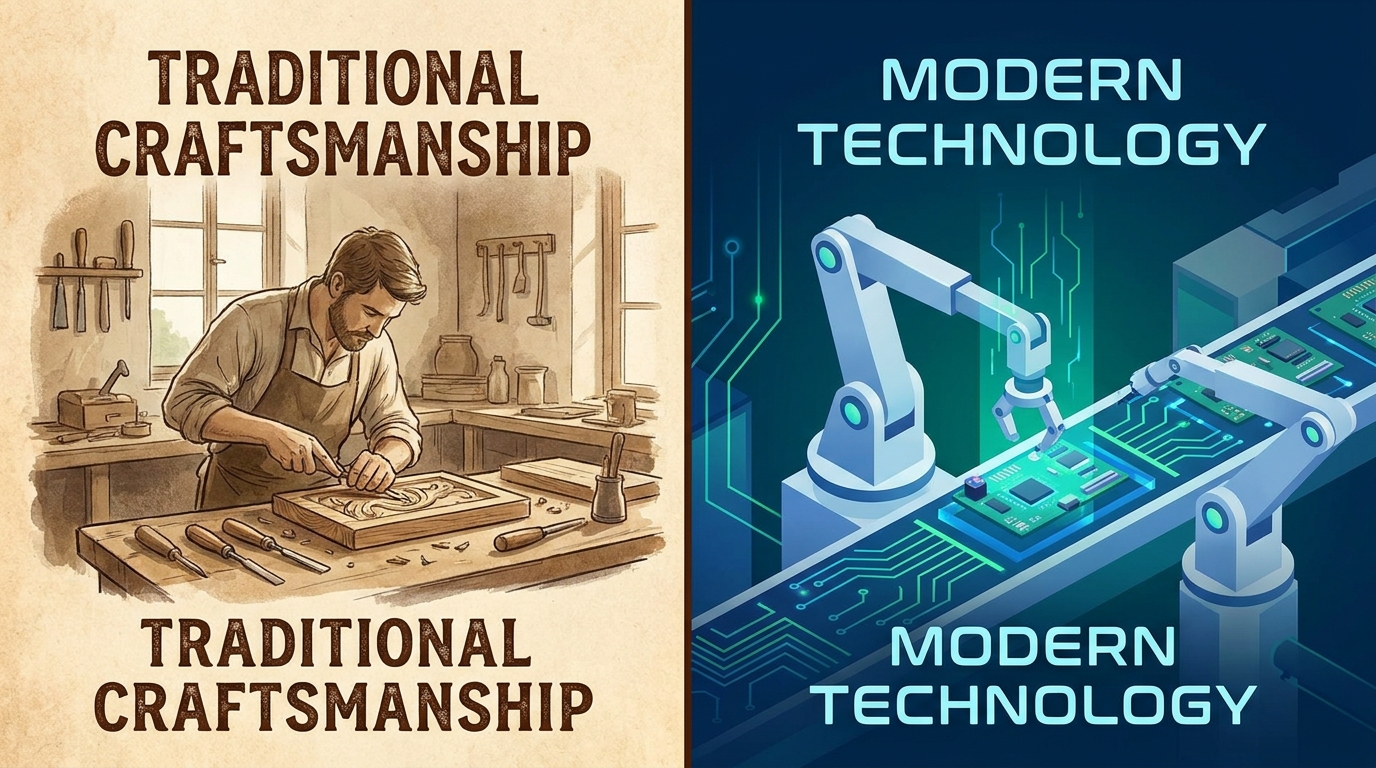
The fundamental difference between Draftly and Dorik lies in their approach to creation. Understanding this is key to seeing which tool fits your agency's model.
!draftly vs dorik ai website builder comparison for agencies, product
Dorik operates on a traditional, block-based no-code philosophy. You start with a blank canvas or a template and manually assemble the site using pre-built sections and elements. It’s a proven method that offers granular control, familiar to anyone who has used a classic page builder. This process is reliable but inherently linear and time-consuming.
Draftly represents the generative AI approach. Instead of giving you a box of bricks, it builds the house for you based on a single, detailed prompt. It generates a unique, multi-page cinematic website with cohesive copy, imagery, and 3D animations in about two minutes. The workflow shifts from manual construction to creative direction and refinement.
- Dorik (The Assembler): You are the builder, piecing together a website from a library of components. Your efficiency is tied to your speed at finding, placing, and styling these blocks.
- Draftly (The Generator): You are the architect, providing the vision that the AI executes. Your efficiency is tied to the quality of your prompt and your ability to refine the AI's high-quality first draft.
Speed and Efficiency: Time-to-First-Draft
For an agency, billable hours are everything. The time it takes to get from a client brief to a presentable first draft is a critical KPI, directly impacting project profitability. Here, the Draftly vs Dorik comparison reveals a stark contrast.
With Dorik, an experienced designer can assemble a professional, multi-page website in roughly 4-8 hours. This is a significant improvement over coding from scratch but still represents a full day of work. The process involves selecting a template, swapping out content, adjusting layouts, and ensuring mobile responsiveness for each section.
With Draftly, the time-to-first-draft is under three minutes. By processing a prompt, Draftly generates a complete, on-brand website that is 85% of the way to completion. This isn't just an empty template; it's a fully-realized concept. Research shows agencies using generative AI can cut initial production times by over 75%, allowing them to handle 3-4x the client volume with the same team size.
What this means for agency workflow
This speed differential fundamentally changes the agency sales and delivery process.
- Pitching: With Dorik, you pitch concepts and mockups. With Draftly, you can generate a live, interactive website during the initial client call, drastically shortening the sales cycle from weeks to days.
- Revisions: The traditional model involves lengthy revision cycles on static designs. Draftly's AI chat editing allows for real-time changes based on conversational feedback, turning revisions into a collaborative, 15-minute session.
- Profitability: By collapsing the initial build phase, agencies can focus more hours on high-value strategy, SEO, and client management, ultimately boosting project margins by an estimated 30-40%.
Design Capabilities and Uniqueness
Every agency wants to deliver a final product that feels custom and premium. A generic, template-driven look can damage a client's brand and the agency's reputation.
Dorik offers a library of clean, professional templates and components. These are excellent for standard business websites, blogs, and landing pages. While customization is possible, the underlying structure of the templates can lead to a certain uniformity. It's a safe, reliable option for clients who need a functional online presence without requiring significant brand differentiation.
Draftly, by contrast, is built for creating unique, immersive experiences. Its core strength is generating cinematic, scroll-driven 3D websites that capture user attention. Instead of flat, static blocks, Draftly builds narratives with motion, video backgrounds, and seamless transitions. This capability allows agencies to serve a more premium market, as 3D websites are the next frontier for brand differentiation.
- Dorik's Strengths: Best for straightforward, functional websites like B2B service pages, simple blogs, and lead capture forms.
- Draftly's Strengths: Ideal for high-impact brand sites, product launches, creative portfolios, and luxury brands that need to tell a compelling visual story.
Agency-Specific Features: A Draftly vs Dorik Look
Both platforms understand that agencies have unique needs beyond the builder itself, such as client management, billing, and white-labeling.
Dorik's Agency Offerings
Dorik has a mature set of features designed for the traditional agency model:
- White-Labeling: You can present the Dorik platform as your own, with custom branding and domains.
- Client Billing: Integrated tools to manage client subscriptions and payments directly.
- Team Collaboration: Standard user roles and permissions for designers, developers, and clients.
These features are solid and cater well to agencies that resell website packages as a service.
Draftly's Agency Offerings
Draftly's agency tools are built around the speed of generative AI:
- White-Labeling: The Draftly for Agencies program provides full white-labeling capabilities, allowing you to deliver stunning AI-generated sites under your own brand.
- Centralized Management: The Draftly Business Centre is a unified dashboard to manage all client projects, track leads, and handle site settings from one place.
- Brand DNA: This is Draftly's standout feature for agencies. You can create a comprehensive brand kit for each client (logos, colors, fonts, mission statement). The AI uses this DNA to ensure every generated site is perfectly and consistently on-brand, saving hours of manual tweaking.
The Final Verdict: Which Builder Should Your Agency Choose?
After a direct Draftly vs Dorik comparison, the choice depends entirely on your agency's business model and target client.
Choose Dorik if:
Your agency focuses on delivering a high volume of simple, functional, brochure-style websites. Your clients prioritize speed and affordability over design innovation, and your team is comfortable with a traditional, hands-on, block-by-block building process.
Choose Draftly if:
Your agency's goal is to scale profitably by dramatically reducing production time without sacrificing quality. You serve premium clients who require unique, immersive websites that stand out. You want to differentiate your agency by offering next-generation 3D and cinematic web experiences that competitors can't easily replicate.
For agencies aiming to increase velocity, elevate their creative output, and improve profit margins, Draftly's generative AI approach provides a clear competitive edge.