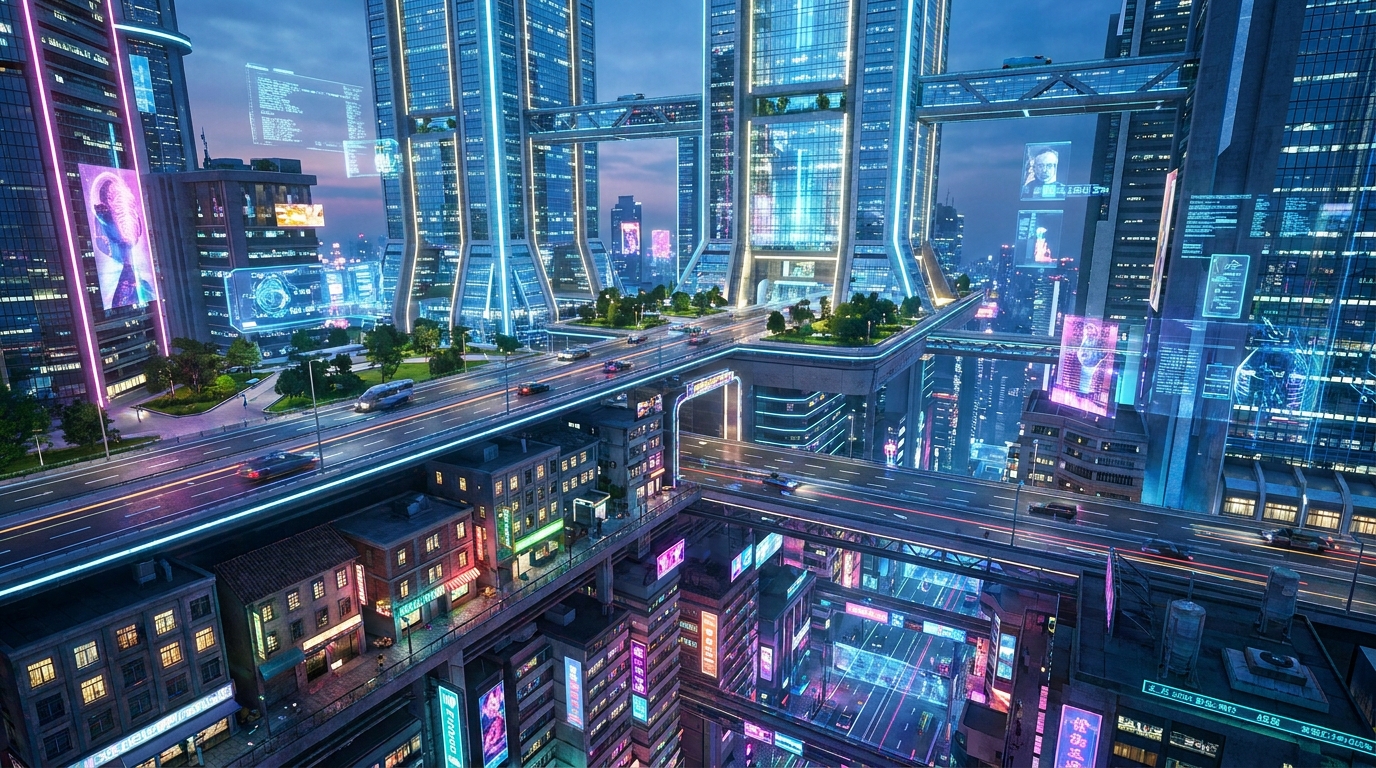
The era of the flat, static webpage is over. For years, we've designed digital experiences as if they were interactive magazines—functional, but fundamentally two-dimensional. In 2025, that model is being replaced by something far more dynamic and engaging. The most impactful web design trends 2025 are not just about aesthetics; they represent a fundamental shift towards immersive, intelligent, and performance-driven digital environments.
User expectations have evolved. A staggering 74% of users are likely to switch brands if they find the purchasing process too difficult or the experience unengaging. The new standard is a website that doesn't just present information but creates a memorable experience. It's about moving from passive viewing to active participation.
The Rise of Immersive 3D Environments
The most significant leap in web design is the move from flat planes to explorable 3D spaces. This isn't about adding a few rotating models; it's about building entire digital environments that users can navigate. For e-commerce, this means virtual showrooms where customers can interact with products from every angle. For service businesses, it could be a 3D representation of their process or impact.
!web design trends dominating 2025 what every builder should know, industry
This trend is directly tied to business outcomes. Brands that incorporate 3D and AR experiences on their websites see a 94% higher conversion rate than those that don't. It bridges the gap between digital browsing and physical ownership, which is why 3D websites are the next frontier for brand differentiation.
* Real-World Example: High-end automotive brands like Porsche now allow users to configure a car in a realistic 3D environment, changing colors and features in real-time. This level of interaction was once limited to dedicated apps but is now a seamless web experience.
* Key Takeaway: 3D on the web is no longer a gimmick. It’s a powerful tool for engagement, education, and conversion that makes digital products feel tangible.
AI-First Design & Personalization
Artificial intelligence is moving from a back-end development tool to a front-and-center element of the user experience. In 2025, the most advanced websites will use AI to create hyper-personalized journeys for every visitor. This goes far beyond showing a user's name on the homepage.
McKinsey reports that effective personalization can lift revenues by 5-15% and increase marketing spend efficiency by 10-30%. This is the driving force behind the AI-first design movement.
Generative UI
Imagine a website layout that reconfigures itself based on a user's browsing history, location, or even the time of day. Generative UI uses AI to create the most effective layout for each individual user, prioritizing content and CTAs that are most relevant to them.AI-Powered Content
Websites can now dynamically generate text and images tailored to a specific user's known interests. A visitor from the tech industry might see case studies relevant to SaaS, while a visitor from retail sees different examples. Learning to guide these systems is a new core skill, making it vital to understand what works with AI-generated website copy and how to refine it for maximum impact.Predictive Assistance
Advanced AI can anticipate user needs. If a user spends time on a pricing page and then moves to the features section, an AI-powered chatbot could proactively offer a comparison or a targeted discount. This turns the website into a responsive, intelligent sales assistant.Cinematic Storytelling Through Scrollytelling
Users don't read websites; they scan them. Scrollytelling, or scroll-driven animation, captures this behavior and turns it into a narrative tool. As a user scrolls, elements animate, videos play, and a story unfolds in a cinematic sequence. It transforms a webpage from a static document into a guided experience.
This technique is incredibly effective because it leverages the power of visual storytelling. Viewers retain 95% of a message when they see it in a video, compared to just 10% when reading text. Scrollytelling brings that video-like retention to the webpage format. This taps directly into the principles of scroll-driven animations and the psychology of user engagement, turning a passive scroll into an active journey.
* Real-World Example: Apple's product reveal pages are the gold standard. As you scroll, the iPhone deconstructs, its features are highlighted with fluid animations, and a compelling narrative is built piece by piece. Each scroll action feels like a discovery.
* Key Takeaway: Don't just tell users about your product; show them. Use the scroll to guide them through a story that is both informative and emotionally resonant.
Performance as a Core Design Principle
As websites become more visually rich with 3D and animations, performance becomes non-negotiable. A beautiful, immersive website that takes five seconds to load is a failure. Google's research shows that the probability of a user bouncing increases by 90% as page load time goes from one to five seconds.
In 2025, the best designers will treat performance as a fundamental part of the creative process, not an afterthought. This means focusing on the metrics that define user experience.
- Optimise Asset Delivery: Using next-gen image formats like AVIF (which offers ~50% better compression than JPEG) and video formats like WebM is standard practice. Lazy loading, where assets only load as they scroll into view, is essential for complex pages.
- Focus on Interaction to Next Paint (INP): This Core Web Vital measures how quickly a site responds to user interactions like clicks and taps. For highly interactive 3D sites, a low INP is critical for the experience to feel fluid and not clunky.
- Leverage Edge Computing: Instead of processing requests from a single server location, edge networks distribute content and logic to servers closer to the user. This dramatically reduces latency, making dynamic and personalized experiences feel instantaneous.
The New Minimalism: Expressive & Tactile
Counterbalancing the complexity of 3D and AI is a trend toward a more intentional and expressive form of minimalism. This isn't the stark, cold minimalism of the past. Instead, it's about using fewer elements but making each one count.
* Expressive Typography: Type is no longer just for reading; it's a primary graphic element. Expect to see oversized, variable, and animated fonts that set the tone for the entire site.
* Tactile Textures: To add depth and warmth to minimalist layouts, designers are using subtle noise, grain textures, and soft gradients. These elements make digital interfaces feel more organic and less sterile.
* Strategic Asymmetry: Breaking the grid with intentionally asymmetrical layouts creates visual tension and guides the user's eye to key focal points. It makes the design feel more dynamic and less predictable.
The future of web design is dimensional, intelligent, and incredibly fast. The brands that succeed will be those that embrace these trends to create websites that are not just platforms for information, but destinations for experiences.
Ready to build a website that's ahead of the curve? Turn a single prompt into a cinematic 3D website with Draftly.


