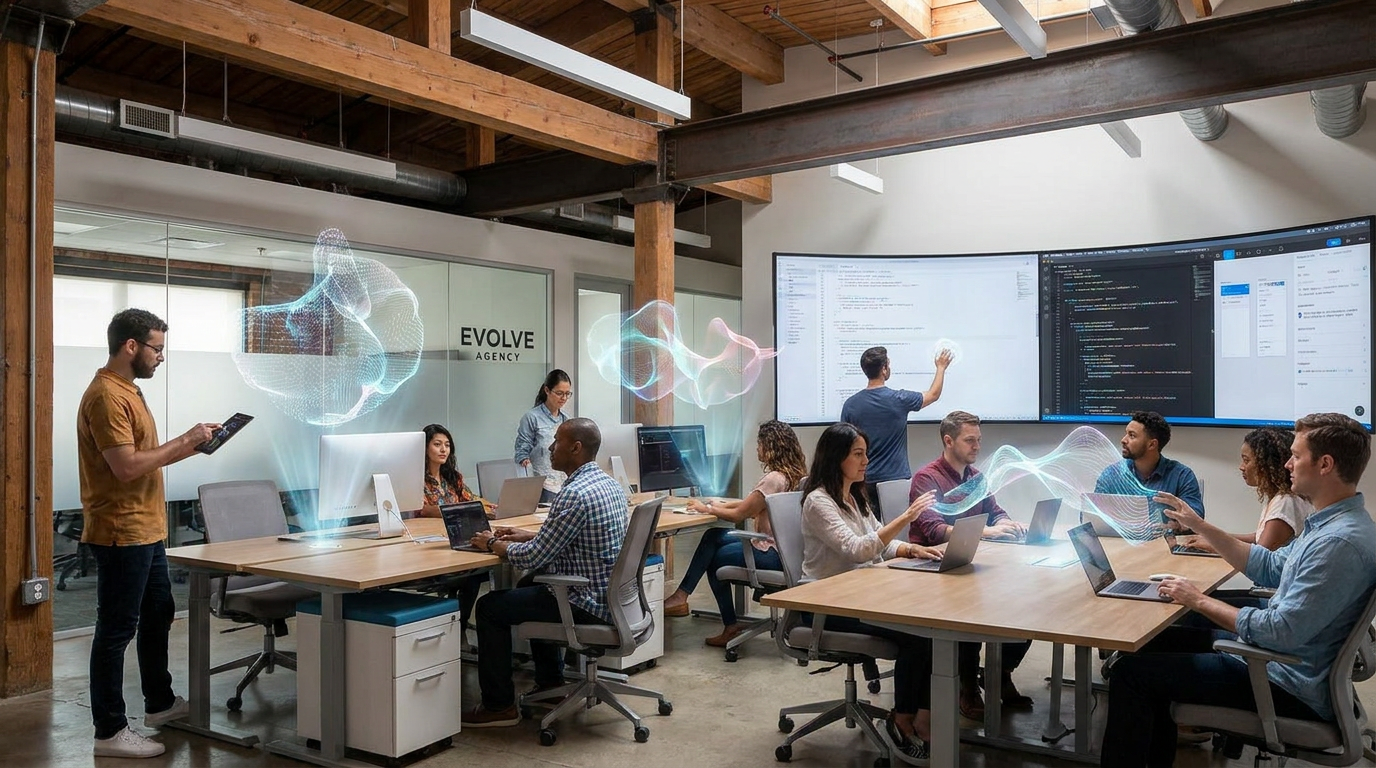
The emergence of generative AI has ignited a fervent debate across industries, and the world of web design is no exception. Is generative AI disrupting traditional web agencies, or merely augmenting their capabilities? The truth lies in a complex interplay of rapid technological advancement and the evolving demands of clients. AI-powered platforms, like Draftly, are transforming how websites are conceptualised, designed, and built, pushing agencies to adapt or risk obsolescence.
The Ascent of Generative AI in Web Design
Generative AI refers to algorithms capable of producing new content, such as text, images, code, or even entire website layouts, from a given prompt or dataset. For web design, this means AI can:
!is generative ai disrupting traditional web agencies an indepth look, industry
* Automate initial drafts: Generate a complete website structure, including sections, copy, and visual elements, in minutes.
* Create dynamic assets: Produce custom images, icons, and even 3D models with simple text commands.
* Optimise user experience: Suggest design improvements based on data analysis and user behavior patterns.
This technology is not just a novelty; it's a force multiplier. The global generative AI market, valued at approximately $11 billion in 2023, is projected to reach over $50 billion by 2028, with significant growth in creative and design applications. This rapid expansion highlights its increasing integration into professional workflows.
Speed and Efficiency: The New Standard
One of the most immediate impacts of generative AI is the dramatic increase in speed and efficiency. What once took days or weeks of manual effort can now be achieved in hours. For instance, an agency using Draftly can generate an initial 3D website from a single prompt, offering a cinematic, scroll-driven experience that captivates visitors. This capability allows agencies to deliver prototypes up to 80% faster than traditional methods, drastically cutting down on initial design phases.
Generative AI's Impact on Traditional Web Agencies
The disruption from generative AI isn't uniform; it presents both significant threats and unprecedented opportunities for traditional web agencies.
Threats: Commoditisation and Cost Pressure
* Reduced barrier to entry: Small businesses and startups can now build professional-looking websites themselves using AI tools, bypassing agencies for basic projects. This is particularly relevant for businesses that previously needed bespoke solutions but now find AI builders sufficient. For a deeper dive into this, consider AI Website Builder vs. Web Agency in 2026: The Real Cost Comparison.
* Price erosion: As the cost and time to build a website decrease with AI, clients expect lower prices. Agencies that solely offer basic website builds face immense pressure to reduce their fees, impacting profit margins. Reports suggest that AI tools can reduce website development costs by 50-70% for simpler projects.
* Skills gap: Agencies reliant on traditional coding and manual design processes may find their skill sets becoming less competitive against AI-fluent competitors. The demand for purely manual front-end development is shifting towards prompt engineering and AI tool integration.
Opportunities: Specialisation and Strategic Value
* Focus on higher-value services: Agencies can pivot from basic website creation to strategic consulting, complex integrations, advanced SEO, sophisticated content strategy, and ongoing performance optimisation. They can become architects of digital ecosystems rather than just builders of websites.
* Enhanced productivity: By offloading repetitive tasks to AI, designers and developers can focus on more complex, creative, and strategic challenges. This frees up time for innovation and deeper client engagement. How Agencies Can Build 10x More Client Websites with AI Tools offers insights into this shift.
* New service offerings: Agencies can offer AI-powered services such as custom AI chatbot integration, generative content creation at scale, or personalised user experiences driven by AI algorithms. The ability to create stunning, interactive 3D websites with AI tools opens new avenues for agencies to differentiate their offerings.
Key Areas of Disruption for Web Agencies
1. Website Creation Speed & Cost
Generative AI drastically accelerates the initial design and development phases. An AI website builder can generate a full site draft, including design and placeholder content, in minutes. This compresses timelines that previously spanned weeks, allowing agencies to take on more projects or deliver faster. The cost savings are equally significant, as fewer human hours are needed for foundational work.
2. Design Iteration & Prototyping
AI tools allow for rapid iteration of design concepts. Agencies can generate multiple design variations, modify them with simple text prompts, and present diverse options to clients much faster. This reduces the feedback loop and ensures client satisfaction earlier in the process. For example, using AI image generation in Draftly: get the best results means agencies can quickly mock up visual assets tailored to client feedback, rather than waiting for graphic designers.
3. Specialised Skills vs. Generalists
The role of the web designer is evolving. While generalist skills in basic web development might face commoditisation, specialised skills become even more valuable. Agencies will need experts in prompt engineering, AI tool integration, data analysis for AI-driven insights, and complex custom coding that AI cannot yet replicate. The focus shifts from executing every detail manually to orchestrating AI tools effectively.
4. Client Expectations
Clients are becoming aware of AI's capabilities. They expect faster turnarounds, more dynamic and immersive experiences (like 3D websites), and greater cost-efficiency. Agencies that fail to integrate AI into their offerings risk being seen as slow, expensive, or outdated. The demand for highly customised, visually rich, and interactive online presences, which AI-powered 3D builders can deliver, is on the rise.
How Agencies Are Adapting (or Should Adapt)
Adaptation is not just about adopting new tools; it's about fundamentally rethinking business models and value propositions.
- Embrace AI as a Co-Pilot: Instead of viewing AI as a competitor, agencies should integrate it into their workflow as a powerful assistant. AI handles the mundane, repetitive tasks, freeing human designers to focus on creativity, strategy, and problem-solving. This symbiotic relationship enhances overall output quality and speed.
- Focus on Strategic Consulting: Agencies need to move up the value chain. Clients still need guidance on branding, market positioning, conversion optimisation, and digital strategy – areas where human expertise, empathy, and creativity remain paramount. Offering deep insights and strategic direction becomes the core service.
- Become AI-Fluent: Training staff in prompt engineering, understanding AI's limitations, and mastering AI website builders like Draftly is crucial. Agencies that can seamlessly integrate AI tools into their processes will gain a significant competitive edge. Learning how to customise your AI-generated 3D website — full guide is a vital step.
- Offer Niche Specialisations: Instead of being generalist web developers, agencies can specialise in complex e-commerce platforms, advanced data visualisations, highly interactive 3D experiences, or AI-driven personalisation. This allows them to command higher fees for unique expertise.
- Prioritise Unique Brand Storytelling: While AI can generate content, the human touch in crafting compelling brand narratives, understanding subtle cultural nuances, and building emotional connections remains irreplaceable. Agencies can leverage AI for efficiency but must retain ownership of authentic storytelling.
The Draftly Advantage for Forward-Thinking Agencies
Draftly is engineered to empower agencies, not replace them. By providing an AI 3D website builder that turns a single prompt into a cinematic, scroll-driven website, Draftly equips agencies to:
* Deliver cutting-edge experiences: Offer clients immersive 3D websites that stand out in a crowded digital landscape, without needing extensive 3D design expertise.
* Increase efficiency and output: Generate high-quality website drafts rapidly, allowing designers to focus on refinement, customisation, and strategic enhancements.
* Scale operations: Take on more clients and projects by leveraging AI to accelerate the initial build phase, improving profitability.
* Maintain brand consistency: Use powerful AI tools to ensure designs and content align perfectly with client brand guidelines, even across multiple projects.
The Future of Web Design: Collaboration, Not Replacement
The disruption from generative AI is undeniable, but it's not a death knell for traditional web agencies. Instead, it's a powerful catalyst for evolution. Agencies that embrace AI, integrate it strategically, and reorient their services towards higher-value, human-centric tasks will not only survive but thrive. The future of web design is a collaborative landscape where human creativity and strategic thinking are amplified by the unparalleled speed and capability of AI. As the web continues to evolve, so too must the agencies that build it. For further insights into this transformation, read The Future of Web Design: What AI Changes and What It Doesn't.
Ready to transform your agency's capabilities with AI? Explore Draftly's features and start building cinematic 3D websites today.


