
Why D2C Brands Need an Immersive Website in 2026
Direct-to-consumer was supposed to be the great equaliser. Remove the retailer, own the relationship, keep the margin. For a few years, that formula worked. In 2026, it has a problem: everyone is using it.
The cost of customer acquisition through paid social has increased by over 60% since 2021. And on the D2C website itself — the moment the brand has total control — most sites look identical to every competitor in the category.
The Attention Problem
When your website looks like every other D2C brand in your category, it cannot do its most important job: make the customer feel something. Feeling something is what turns a visitor into a buyer.
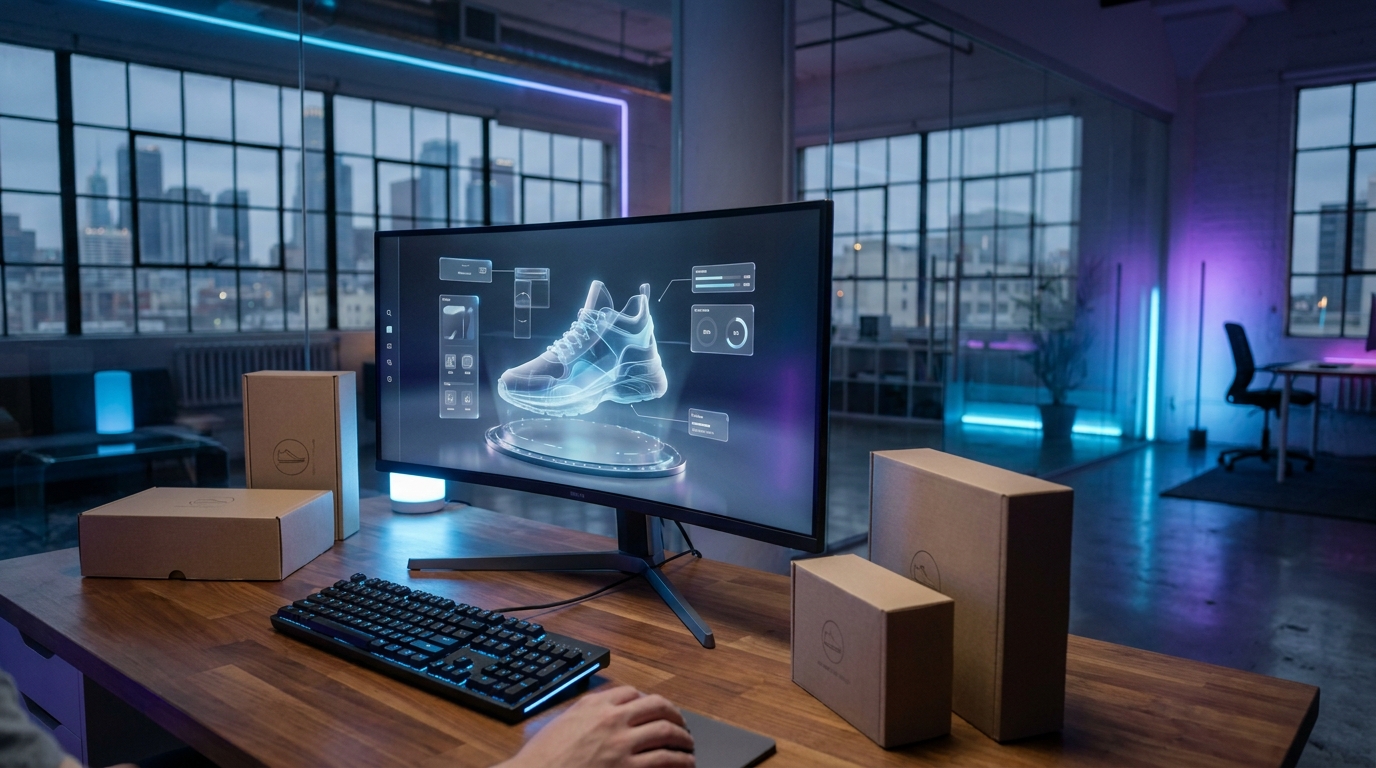
Immersive 3D websites address this directly. Rather than presenting a product on a white background with five photographs and a bullet-point list, an immersive site puts the visitor inside the brand's world. For a full explanation of what makes 3D websites special, read What is a 3D Website and Why Your Business Needs One.
What Immersive Means in Practice
An immersive D2C website is not a tech demo. It is a brand experience built around the customer journey:
- A brand environment for the hero section — a 3D scene that reflects the brand's world
- Interactive product presentation — 360-degree viewers, material selectors that update in real time
- Spatial storytelling through scroll — the 3D environment evolves as the user scrolls
- Micro-interactions that reward attention — small animations triggered by hover or cursor position
The Commercial Case
Higher time on site → more exposure to the brand story → higher average order values. Customers who have spent five minutes in your brand world are more likely to buy, more likely to buy more, and more likely to return.
Lower return rates follow from better product understanding. Customers who can see a product from every angle arrive with accurate expectations.
Luxury vs. D2C Immersive Design
While luxury brands optimise for exclusivity and restraint, D2C brands should optimise for energy and engagement. See 3D Websites for Luxury Brands: What Works and Why for the comparison.
The Draftly Advantage
A custom 3D immersive website built by a specialist agency costs ₹8–25 lakh and takes three to six months to deliver. Draftly produces comparable output in minutes, at a fraction of the cost.
To understand all the use cases where 3D creates commercial impact, read Top 10 Use Cases for 3D Websites in 2026.


