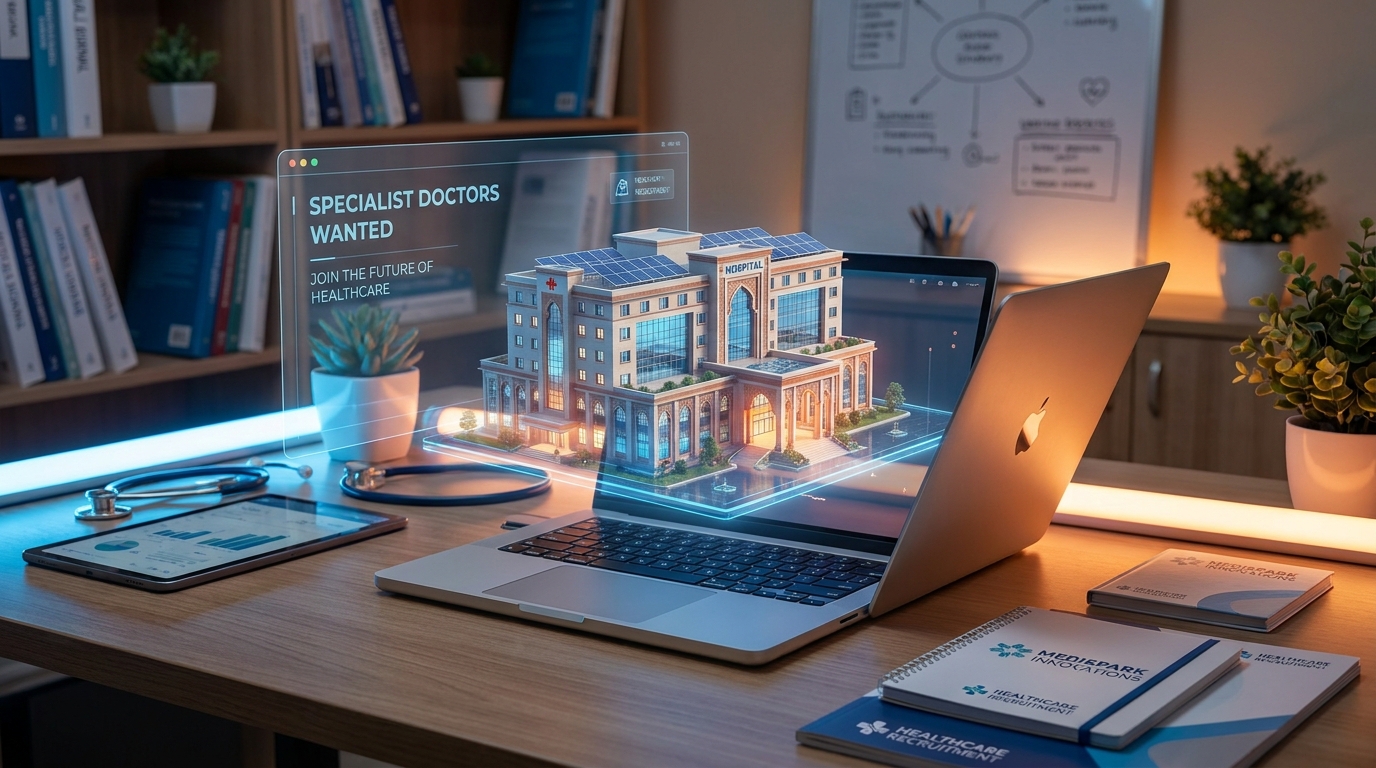
How 3D Recruitment Pages Help Indian Healthcare Startups Attract Specialists
Hiring top-tier specialists is a critical challenge for Indian healthcare startups, especially in a competitive market where skilled professionals are in high demand. 3D recruitment pages offer a unique solution, combining immersive visuals and interactive storytelling to engage and convert candidates effectively.
Why Traditional Job Portals Fall Short
Traditional job portals often rely on flat, text-heavy descriptions that fail to capture the essence of a role or the culture of a startup. This is particularly problematic in the healthcare sector, where specialists prioritize organizational vision and cutting-edge facilities.
!how 3d recruitment pages help indian healthcare startups attract specialists, industry
- 73% of job seekers say they’re more likely to apply if a company’s career page visually showcases its environment and work culture.
- Indian healthcare startups face a growing shortage, with a 2:1 demand-supply gap for specialists in fields like oncology and cardiology (source: NITI Aayog).
- For startups aiming to recruit globally, static portals lack the engagement needed to attract international talent.
The Benefits of 3D Recruitment Pages
1. Immersive Facility Tours
A 3D recruitment page can include interactive virtual tours of healthcare facilities, allowing specialists to explore state-of-the-art labs, patient wards, and research centers without leaving their homes.
- Candidates gain a clear understanding of the workspace.
- Startups can highlight their investment in technology and patient care.
- Virtual tours increase application rates by up to 45%, as per a LinkedIn study on video content engagement.
2. Showcasing Employer Branding
A strong employer brand is critical for attracting healthcare specialists. 3D pages can:
- Highlight the startup’s mission and impact through scroll-driven storytelling.
- Use motion graphics to showcase patient success stories and testimonials.
- Embed dynamic team videos featuring current employees sharing their experiences.
3. Interactive Job Descriptions
Interactive job descriptions go beyond static text by allowing candidates to:
- Hover over job roles to view detailed requirements.
- Use filters to match their skills with available positions.
- Access scenario-based simulations to understand day-to-day responsibilities.
Real-World Example: Revolutionizing Healthcare Hiring
Take the example of a Bengaluru-based healthtech startup recruiting radiologists for its AI-driven diagnostics platform. By implementing a 3D landing page, the company:
- Showcased its AI lab through a 360-degree virtual tour.
- Highlighted impact metrics, such as reduced diagnostic errors by 25%.
- Embedded a click-to-apply feature, which reduced drop-offs by 40%.
How to Build a 3D Recruitment Page Using Draftly
Draftly’s AI-powered tools simplify the creation of cinematic, scroll-driven recruitment pages tailored for Indian healthcare startups.
Step-by-Step Guide
- Prompt Input: Provide a single prompt describing your hiring needs, such as “Create a 3D career page for recruiting cardiologists.”
- Custom Animations: Use Draftly’s advanced animation options to highlight key sections like facilities, team culture, and job roles.
- Interactive Elements: Add hoverable job descriptions and application forms using Draftly’s section library.
- Mobile Optimization: Ensure the page loads seamlessly on mobile devices, critical for India’s 700M smartphone users.
Why 3D Career Pages Are the Future
Enhanced Engagement
3D elements like interactive tours and motion graphics capture attention better than traditional formats. This is crucial in healthcare, where specialists evaluate not just the job but the organization’s overall ethos.
Improved SEO
With Google favoring rich, interactive content, 3D recruitment pages rank higher for targeted keywords such as “healthcare specialist jobs in India.” Learn more about Google’s ranking factors.
Faster Hiring Cycles
By pre-qualifying candidates through interactive job descriptions and virtual tours, startups can significantly reduce time-to-hire.


