The Indian online jewellery market is projected to surge past $3.7 billion by 2025, growing at a staggering compound annual growth rate of nearly 28%. But capturing a piece of this market requires more than a simple digital catalogue. For a high-consideration purchase steeped in tradition and trust, your jewellery brand website in India must be an immersive experience that blends artistry with airtight credibility.
A generic e-commerce template won't cut it. Customers aren't just buying a product; they are investing in an heirloom, a celebration, a piece of your brand's legacy. Your website must communicate that value from the very first click.
Beyond the Digital Catalog: Designing a Website That Dazzles
The challenge is to translate the tactile, in-person showroom experience into a digital format. This is where design moves from being a simple aesthetic choice to a core business function. It’s about building desire and confidence simultaneously.
!jewellery brand website india a guide to design, trust sales, india
Immersive Product Visuals are Non-Negotiable
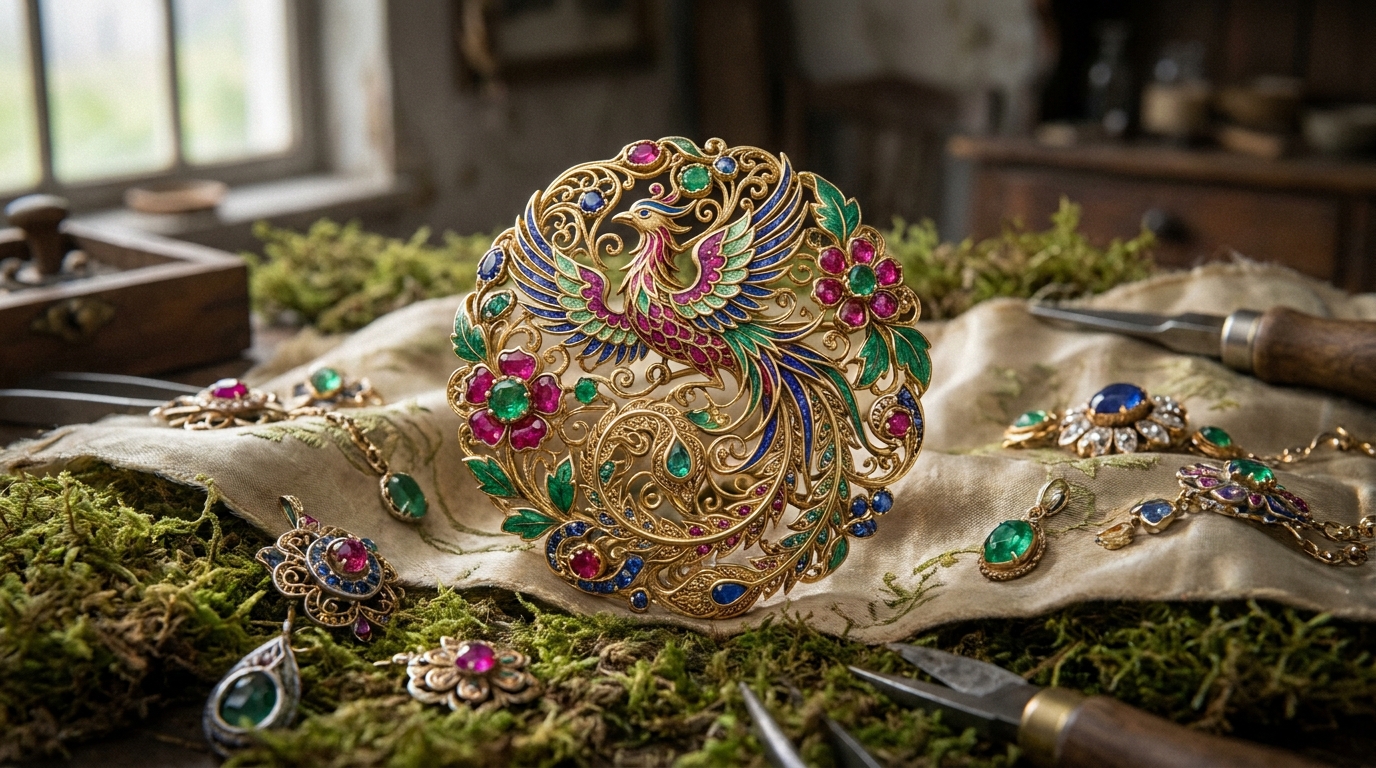
Standard, flat product photos are no longer enough to capture the intricate craftsmanship of a finely made piece of jewellery. Customers need to see the sparkle, the cut, and the way a piece interacts with light.* High-Resolution Imagery: Allow users to zoom in and see every detail, from the setting prongs to the clasp mechanism. This isn't just a feature; it's a transparency signal.
* 360-Degree Views: Give customers control. Letting them rotate a ring or a pair of earrings provides a sense of ownership and understanding of the product's dimensions.
* 3D Renderings: The gold standard for online jewellery is 3D. It allows you to showcase the depth and complexity of your designs in a way static images cannot. In fact, why 3D product pages reduce e-commerce returns by up to 40% is because they set crystal-clear expectations, bridging the gap between the digital view and the physical product.
A Flawless Mobile-First Experience
With over 75% of India's e-commerce traffic originating from smartphones, a mobile-responsive site is just the starting point. You need a mobile-first strategy. This means designing the entire user journey for the small screen, ensuring buttons are easily tappable, navigation is intuitive, and product details are legible without excessive pinching and zooming. A clunky mobile interface is one of an online jeweller's biggest conversion killers. Prioritising this is essential, considering that for mobile-first web design in 2026, why 80% of your Indian visitors are on their phone is a reality you can't ignore.Reflecting Indian Aesthetics with a Modern Twist
Your website's visual identity should feel both luxurious and culturally resonant. This involves a thoughtful approach to your digital brand kit.* Colour Palette: While golds, deep reds, and royal blues are classic choices, modern D2C brands are successfully using pastels and minimalist palettes to appeal to a younger demographic. The key is consistency.
* Typography: Choose fonts that are elegant and highly readable. A combination of a classic serif for headings and a clean sans-serif for descriptions often works best.
* Whitespace: Don't clutter your pages. Generous use of whitespace makes your products the hero and gives the site a premium, high-end feel. You can learn more about how to customise fonts, colors and your brand kit in Draftly to maintain this consistency effortlessly.
Building Unbreakable Trust: The Real Currency Online
For Indian consumers, buying gold and diamonds online is a massive leap of faith. Your website's primary job is to build a bridge of trust, strong enough to support a high-value transaction. Every element on your site either builds or erodes this trust.Radical Transparency in Every Detail
Ambiguity is the enemy of trust. Provide exhaustive information that preempts customer questions and demonstrates your credibility.- Hallmarking and Certification: Prominently display your BIS Hallmark license number. For diamond jewellery, provide downloadable GIA, IGI, or other relevant certificates for each product.
- Detailed Specifications: Go beyond the basics. List the exact metal weight, diamond carat, colour, clarity, and dimensions. The more specific you are, the more confident the buyer feels.
- Clear Pricing Breakdowns: Show the gold/platinum rate, stone value, making charges, and GST. This transparency, pioneered by brands like CaratLane and BlueStone, is now the industry standard.
The Power of Social Proof and Storytelling
People trust people. A brand's story and the experiences of other customers are powerful persuasion tools.* Customer Reviews: Integrate a review system with photos and videos. A customer wearing your necklace is infinitely more persuasive than a stock photo.
* Brand Story: Your 'About Us' page is one of the most critical sections. Share your brand's legacy, the story of your craftsmanship, or the founder's vision. This emotional connection is what separates memorable brands from simple retailers. Knowing how to write an about page that converts visitors to clients is a skill that directly impacts trust and sales.
Secure Policies and Accessible Support
Your operational policies are a direct reflection of your confidence in your own products.* Policies: Clearly articulate your return, lifetime exchange, and buy-back policies. A clear, customer-friendly return policy can reduce purchase anxiety by over 50%.
* Payment Security: Display trust seals like 'Secure SSL Encryption' and use reputable payment gateways. With cart abandonment rates in India hovering around 55%, ensuring a smooth and secure checkout is vital.
* Support: Offer multiple channels for support, with a WhatsApp chat widget being almost mandatory. Instant access to a human representative can be the deciding factor for a hesitant buyer.
From Clicks to Customers: Engineering the Website for Sales
A beautiful, trustworthy website is a great start, but it must also be engineered to guide visitors smoothly toward a purchase.Simplified Navigation and Filtering
Don't make users hunt for what they want. A well-structured navigation system is crucial.* Mega Menus: Use clear top-level categories like 'Rings', 'Earrings', 'By Occasion', 'Collections'.
* Advanced Filtering: Allow users to drill down with filters for price range, metal type, gemstone, style, and availability. A study showed that e-commerce sites with effective filtering can see a 20% uplift in conversions.
The 'Virtual Try-On' Experience
One of the biggest hurdles online is the inability to try the product on. Technology offers powerful solutions.* Augmented Reality (AR): While still an investment, AR 'try-on' features are becoming a key differentiator, capable of boosting conversion rates by as much as 90% for certain product categories.
* Model Imagery: At a minimum, include high-quality photos and videos of models wearing the jewellery. This helps customers gauge the size, scale, and look of the piece in a real-world context.
The Optimized Indian Checkout
Your checkout process should be fast, flexible, and familiar to the Indian consumer.* Payment Options: Offer a wide array of payment methods, including UPI, major credit/debit cards, net banking, and popular digital wallets. EMI options are particularly important for higher-value items.
* Guest Checkout: Forcing account creation is a major point of friction. Allow users to check out as a guest to speed up the process.
* Clear Communication: From order confirmation to shipping updates, keep the customer informed at every step via SMS, email, and WhatsApp.
Your website is your brand's flagship store in the digital world. By focusing on an immersive design, building layers of unbreakable trust, and engineering a seamless path to purchase, you can create a jewellery brand website in India that doesn't just display products—it drives sales and builds a legacy.
Ready to build a jewellery website that captures the essence of your brand and converts visitors into loyal customers? Create your cinematic 3D website with Draftly.