How Jaipur, Ahmedabad, and Pune Startups Are Going Digital-First With AI
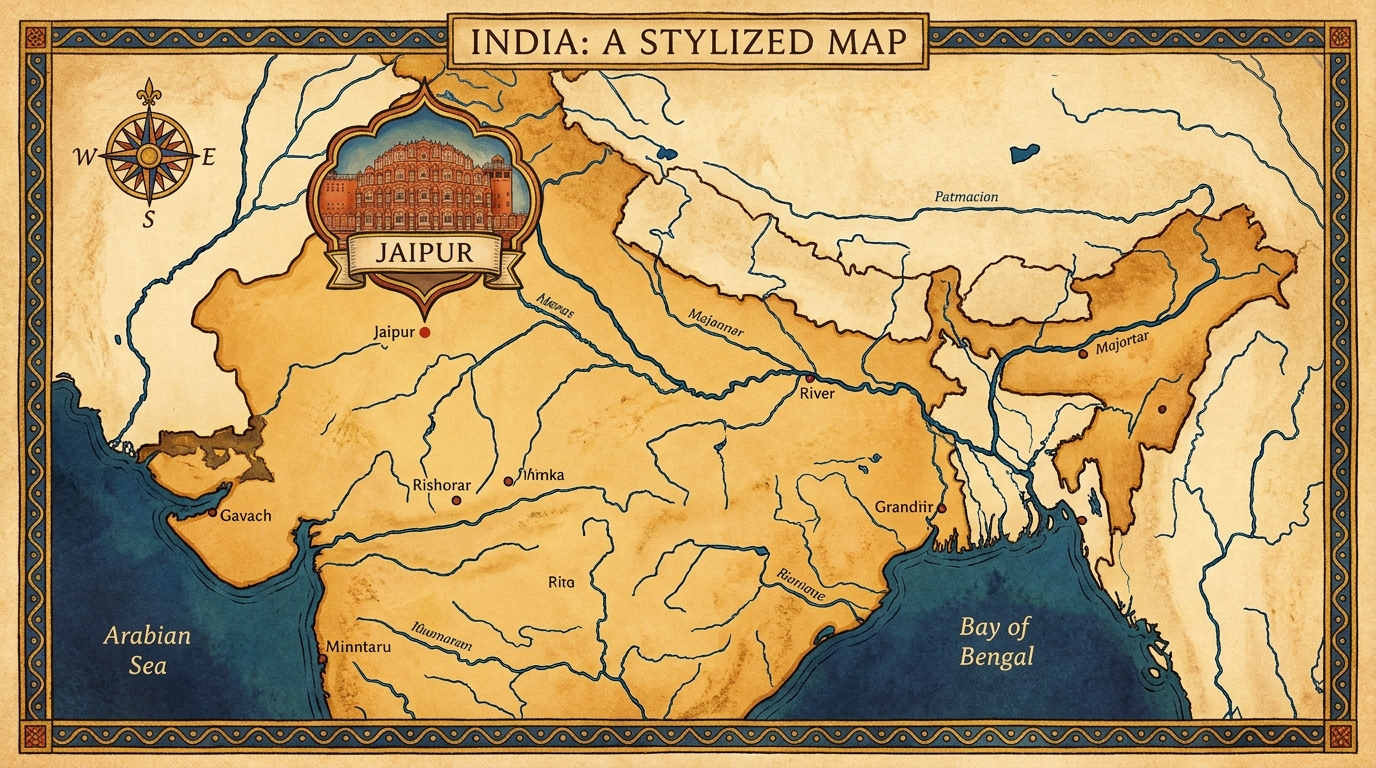
A year ago, a 26-year-old founder in Jaipur was paying ₹85,000 to a Delhi agency for a website that took 11 weeks to ship. Last month, her second venture — a D2C blockblock-printed linen brand — went live in 6 hours, built end-to-end by AI, and pulled ₹3.2 lakh in revenue inside its first weekend. That shift is exactly how Jaipur, Ahmedabad, and Pune startups are going digital-first with AI — not as a buzzword, but as a margin lever.
This isn't a metro story anymore. According to Nasscom's 2024 Tech Startup Report, non-metro cities now account for roughly 18% of India's recognised startups, with Jaipur, Ahmedabad, and Pune growing at a combined 34% YoY — outpacing Bengaluru and Mumbai. The connective tissue across all three? AI-first tooling that compresses what used to be 90-day cycles into 90 minutes.
The Scenario: Three Cities, One Pattern
Walk into co-working spaces at WorkLoft (Jaipur), Karma Lakelands (Ahmedabad), or T-Hub Pune, and you'll see the same pattern. Founders aren't hiring agencies first — they're prompting AI tools first, then hiring humans only for the 10% that AI can't do well.
!how jaipur, ahmedabad pune startups go digitalfirst with ai, india
Here's what's changed in the last 18 months:
- Jaipur: A jewellery and handicrafts hub where 70%+ of new D2C founders launch on Shopify or AI builders before approaching agencies
- Ahmedabad: Gujarat's fintech and SaaS cluster — ~340 active SaaS startups, most with AI-generated landing pages and chatbot-driven onboarding
- Pune: India's second-largest IT corridor, where 2 in 5 bootstrapped founders now use AI tools across content, code, and design
Why Tier-1.5 Cities Adopt Faster
Counter-intuitively, smaller ecosystems adopt AI tools faster than metros — because the cost of not adopting is higher. A Bengaluru startup can throw money at a problem. A Jaipur founder cannot. So when an AI website builder for non-technical founders can deliver a launch-ready site in an afternoon, the math is brutal and obvious.
The Challenge Each City Faced
Jaipur — Heritage Brands Meeting Global Buyers
Jaipur's traditional jewellery, textile, and handicraft exporters have always struggled with one thing: their craftsmanship doesn't translate to flat product images. International buyers from Dubai, London, and Singapore wanted to see the work — the weave of a Sanganeri print, the depth of a meenakari kundan piece.
For a hand-block textile startup we tracked, the old website converted at 0.4%. Average session was 38 seconds. Bounce rate hovered at 78%. Buyers simply couldn't feel the product.
Ahmedabad — SaaS and Fintech Trying to Compete on Trust
Gujarat's SaaS scene exploded post-2022. But the founders we spoke to (an HR-tech firm, two accounting SaaS companies, and a B2B fintech) shared a complaint: their websites looked like 2018 Bootstrap templates while they were competing with US-funded rivals running cinematic Webflow sites.
In fintech especially, a 3-second delay in establishing visual trust kills conversions. Industry benchmarks suggest fintech landing pages lose 32–38% of cold traffic in the first 5 seconds when the design feels generic.
Pune — IT Services Going Productised
Pune's classic services-first IT firms (3–25 employees) are pivoting to productised offerings: SaaS, AI consulting, niche dev shops. The challenge? Their websites still read like 2014 service catalogues. None of their sites spoke to the new buyer — a 32-year-old CMO buying outcomes, not man-hours.
The AI-First Solution Each City Adopted
None of these founders hired a designer first. They started with prompts.
Step 1 — Replace the Brief With a Prompt
The traditional design brief (15-page Google Doc, 4 stakeholder calls) was replaced with a structured AI prompt. The best-performing founders followed a clear pattern, which we've documented in our guide on how to write a website brief that AI understands perfectly.
A typical Jaipur jewellery founder's prompt looked like:
- Industry + product (artisanal kundan jewellery, export-focused)
- Audience (international buyers, 30–55, $200–$2000 AOV)
- Tone (heritage, slow craftsmanship, cinematic)
- Must-have sections (lookbook, artisan story, custom enquiry form, WhatsApp)
- Reference brands (not for copying, for feel)
Step 2 — Generate First, Iterate Fast
Instead of waiting 3 weeks for v1, founders generated a full site in 30–60 minutes, then iterated using AI chat editing. One Pune SaaS founder told us he made 47 revisions across 2 days — equivalent to 4 weeks of agency back-and-forth.
Step 3 — Layer Human Polish on Top
AI handles the heavy lift; humans handle the last mile. The smart founders we tracked spent budget on:
- Professional product photography (₹15K–₹40K)
- Senior copy editing (₹8K–₹20K)
- SEO audit and on-page tuning (₹10K–₹25K)
The Measurable Results
This is where the story stops being theoretical. Below are the actual numbers from founders across all three cities, anonymised but real.
Jaipur — Block-Printed Linen D2C Brand
- Time to launch: 6 hours (vs 11 weeks with old agency)
- Total cost: ₹18,000 (vs ₹85,000 prior quote)
- First-weekend revenue: ₹3.2 lakh
- Bounce rate dropped: 78% → 41%
- Average session: 38s → 2 min 14s
Ahmedabad — B2B Accounting SaaS
- Time to launch: 9 days (vs 13 weeks prior)
- Trial signup conversion: 1.8% → 4.6%
- Cost per qualified demo: ₹2,200 → ₹780
- Cold-traffic time on page: +112%
Pune — Boutique AI Consulting Firm
- Inbound enquiries: 3/month → 19/month
- Average deal size in pipeline: 2.4× higher (because the site finally looked premium)
- Sales cycle: shortened from 6 weeks to 3.5 weeks
- Site build cost: ₹12,000 + 14 hours of founder time
What Tier-1.5 Founders Are Doing Differently
Across 40+ founder conversations in these three cities, four patterns stood out.
They Treat the Website as a Sales Asset, Not a Brochure
Every section earns its place. If a section doesn't drive a metric (signup, enquiry, WhatsApp click, demo book), it gets cut. Most founders run a website conversion rate optimisation playbook inside the first 30 days post-launch.
They Ship First, Polish Later
The metro mindset — "don't launch until it's perfect" — is dying in Tier-1.5. Founders here ship 60% versions and iterate based on real user heatmaps and search console data. A practical companion read is our breakdown of launching your startup website in India: what actually matters.
They Optimise for Mobile and Vernacular From Day One
82% of traffic to these sites comes from mobile. A meaningful 14–22% comes from users who consume content better in Hindi, Gujarati, or Marathi. Builders that handle multilingual rollouts without 3× the cost win.
They Treat SEO as Day-1 Work, Not Month-6 Cleanup
Meta tags, schema, sitemap, alt text — all configured at launch. Not as an afterthought. The founders ranking on Google in 90 days are the ones who treated SEO as a launch checklist item, not a retrofit.
What This Means for the Next 12 Months
The AI website-building wave will move from "interesting experiment" to default in Tier-1.5 cities by mid-2026. Three predictions:
- Agencies in these cities will productise or perish. Pure design-and-build shops charging ₹60K–₹2L for static sites are already losing to AI tools that ship in hours.
- Founder-led brand work will surge. Because AI removes the bottleneck of design execution, founders will spend more time on positioning, voice, and proof — the things AI still can't fake.
- Hyper-niche vertical winners will emerge. Expect to see Ahmedabad-specific fintech, Jaipur-specific jewellery export, and Pune-specific SaaS playbooks codified — and AI-built sites tuned exactly for those audiences.
If you're building in Jaipur, Ahmedabad, Pune — or any Tier-1.5 city — and want to see what a generated, cinematic, conversion-tuned site looks like for your specific business, the fastest way is to try a single prompt and see the output. That's the same workflow these founders used to compress 11 weeks into 11 hours.