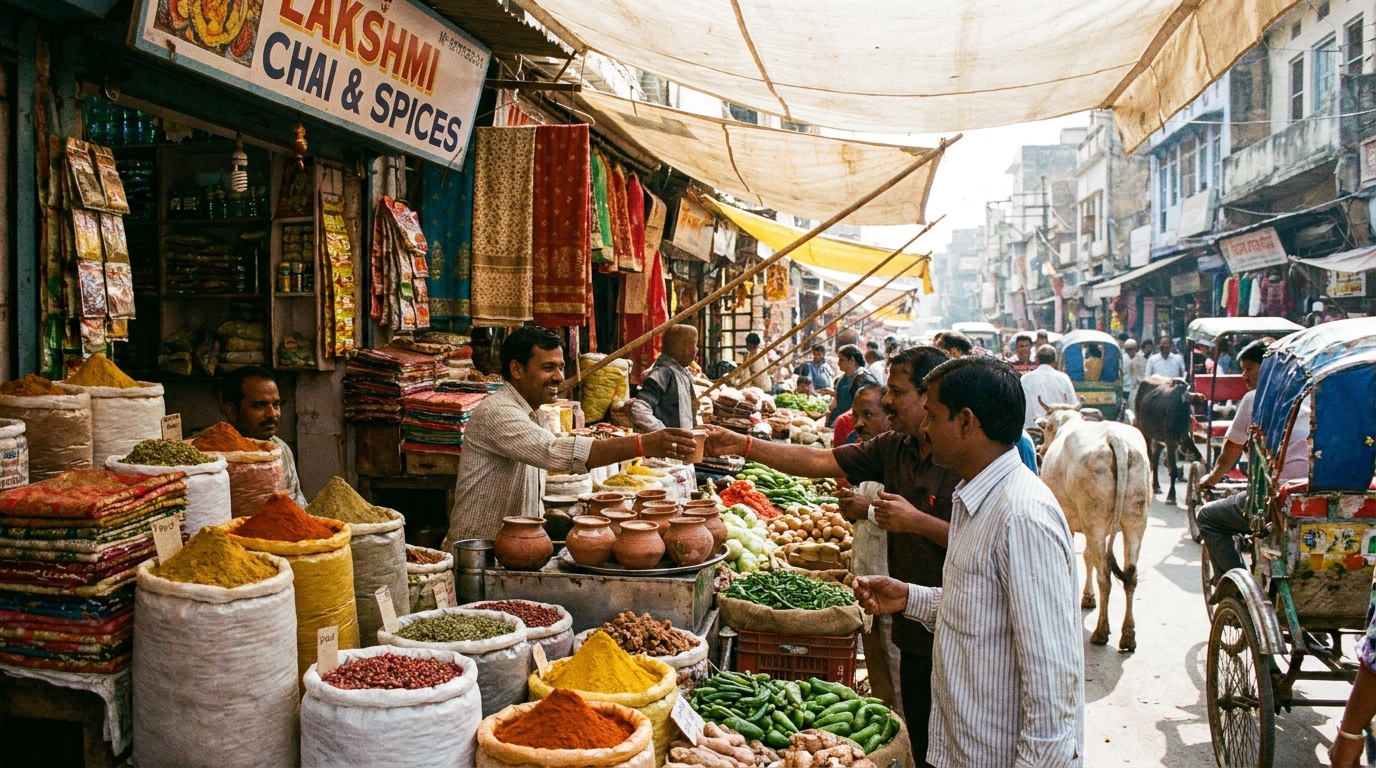
Best Website Builders for Indian Small Businesses in 2026
Choosing the best website builders for Indian small businesses in 2026 is no longer a question of which platform looks prettiest — it's about which one understands GST invoices, UPI checkouts, mobile-first traffic from Tier-2 cities, and pages that load on a 4G connection in under 2.5 seconds. Roughly 14 million Indian MSMEs now have some form of digital presence, but only 38% own a self-hosted website. The rest still rely on Instagram bios and WhatsApp catalogues.
This guide cuts through marketing claims and ranks the seven platforms most Indian small business owners are actually evaluating right now — based on price in rupees, India-specific features, SEO control, and real-world performance.
How I Evaluated Each Builder
Before the rankings, here's the scoring framework. A website builder for an Indian small business in 2026 needs to clear seven hurdles, not just two or three.
!best website builders for indian small businesses in 2026, india
- Total cost in INR (Year 1) — including domain, hosting, SSL, and payment fees
- Indian payment gateways — Razorpay, PhonePe, UPI, Paytm support out of the box
- GST and invoicing compliance — ability to issue tax-compliant receipts
- Mobile performance — Core Web Vitals on a mid-range Android over 4G
- SEO control — schema, meta tags, sitemap, hreflang for English + Hindi
- Learning curve — can a non-technical founder ship in a weekend?
- Local support — IST-friendly help, documentation in English
Why International Rankings Don't Translate to India
Most "best website builder" lists are written for US or UK audiences. They ignore three realities that matter here:
- Payment friction — Stripe doesn't fully serve Indian consumers. You need Razorpay or PayU integration.
- Bandwidth reality — 73% of Indian web traffic is mobile, and average 4G speeds in Tier-3 cities hover around 18 Mbps, not 100.
- Pricing sensitivity — A ₹1,500/month plan is not the same friction as a $15/month plan in the West.
The Shortlist: 7 Builders Worth Considering in 2026
Here's the honest breakdown. No platform is universally "best" — each wins for a specific kind of business.
1. Draftly — Best for Differentiated, Cinematic Sites
Draftly generates a complete multi-section, scroll-driven website from a single prompt. For Indian D2C brands, designers, and consultants who need to look premium without hiring a ₹2-lakh agency, it's the strongest option in 2026.
- Strengths: AI-generated 3D scroll experiences, chat-based editing for non-technical users, fast hosting, clean SEO panel, custom domain support
- Weaknesses: Not built for catalogue-heavy ecommerce with 500+ SKUs; better for storytelling-first sites
- Indian fit: Custom domains, Razorpay-compatible forms, GST-ready invoice blocks, mobile-first rendering
- Price: Free trial available; paid plans start at competitive INR pricing
2. Shopify — Best for Pure-Play Ecommerce
If you're selling 50+ SKUs with inventory, variants, and shipping zones, Shopify remains the operational workhorse. Indian D2C brands like Mamaearth and boAt scaled on it for a reason.
- Strengths: Inventory, abandoned cart recovery, hundreds of India-friendly apps (Razorpay, Shiprocket, Delhivery), strong checkout
- Weaknesses: Monthly cost adds up (₹2,200+ base plus app subscriptions); design feels templated; transaction fees if you don't use Shopify Payments
- Indian fit: Strong — Razorpay, COD plugins, GST apps, regional shipping integrations
- Best for: Fashion brands, beauty D2C, food brands with logistics
3. Wix — Best for Absolute Beginners on a Tight Budget
Wix remains the default "my cousin will make my website" choice. It's gotten better in 2026 with Wix Studio, but it shows its age in code bloat and slower mobile performance.
- Strengths: Drag-and-drop simplicity, 800+ templates, app market, lifetime familiarity in India
- Weaknesses: Mobile PageSpeed often hovers in the 50-70 range, SEO control is limited compared to dedicated platforms, design feels generic
- Indian fit: Razorpay integration available but clunky
- Best for: A neighbourhood salon, tuition centre, or kirana store with no design ambitions
4. WordPress + Elementor — Best for Long-Term Flexibility
Still powers about 43% of the web globally, and around 39% of Indian SME sites. The catch: it's only "cheap" if you ignore the cost of plugins, security, and the 6-10 hours/month of maintenance.
- Strengths: Total ownership, infinite customization, strong SEO via Rank Math or Yoast, massive developer pool in India
- Weaknesses: Security patches, plugin conflicts, hosting upgrades, slow without aggressive optimization
- Indian fit: Excellent — every Indian payment gateway has a WordPress plugin
- Best for: Content-heavy businesses (coaching, media, B2B) willing to maintain it
5. Squarespace — Best for Portfolio-Driven Service Businesses
Clean, designer-friendly, and stable. The problem: it's priced in USD, and Razorpay support is workable but not native.
- Strengths: Beautiful templates, reliable hosting, good built-in SEO basics
- Weaknesses: ₹1,600+/month entry, foreign currency billing, weaker India ecosystem
- Best for: Wedding photographers, boutique studios targeting international clients
6. Framer — Best for Design-Forward Tech Brands
Framer has become the indie SaaS founder's darling. It's powerful but has a real learning curve and is overkill for a local business.
- Strengths: Pixel-perfect design control, fast hosting, strong animations
- Weaknesses: No native Indian payment integration, steep learning curve, USD pricing
- Best for: Indian SaaS startups targeting global customers
7. Zoho Sites / Bigin — Best for Existing Zoho Users
If you already run Zoho Books for GST or Zoho CRM, Zoho Sites is a logical bolt-on. It's not the prettiest, but the integration depth is unmatched for Indian compliance workflows.
- Strengths: Native GST, Indian billing, deep CRM tie-in, ₹0 plan available
- Weaknesses: Limited templates, dated design feel
- Best for: Traditional B2B firms, CAs, consultancies
Comparison Table: Quick Decision Matrix
| Builder | Year-1 Cost (INR) | Best For | Mobile Speed | Indian Payments |
|---|---|---|---|---|
| Draftly | ₹15K–₹35K | Cinematic, differentiated sites | Excellent | Razorpay-ready |
| Shopify | ₹35K–₹60K | Ecommerce 50+ SKUs | Good | Native |
| Wix | ₹8K–₹18K | Beginner local business | Average | Workable |
| WordPress | ₹6K–₹40K | Content-heavy, long-term | Variable | Excellent |
| Squarespace | ₹20K–₹30K | Portfolios | Good | Workable |
| Framer | ₹20K–₹35K | SaaS, global tech | Excellent | Limited |
| Zoho Sites | ₹0–₹12K | Zoho-native businesses | Average | Native |
The Hidden Costs Nobody Mentions
A "₹399/month" plan rarely stays ₹399. Here's what Indian SMEs actually pay in Year 1:
- Domain (.in or .com): ₹700–₹1,400
- Premium template or theme: ₹2,000–₹6,000 (one-time)
- Payment gateway transaction fees: 2% per transaction
- Email hosting (Google Workspace): ₹1,500/user/year
- Backup, security, SSL upgrades: ₹3,000–₹8,000
- Content writing or photography: ₹5,000–₹25,000
What About Free Builders?
Google Business Profile and Instagram are not websites — they're channels you don't own. The day Meta changes its algorithm, your discoverability evaporates. A self-hosted site is the only digital asset you actually control, which is why every Indian small business needs a website — not just a social handle.
My Concrete Recommendation
If I had to advise three archetypes of Indian small business owners in 2026:
- D2C brand, designer, consultant, coach, or studio that needs to look premium and differentiated → Draftly. The output looks like a ₹2-lakh agency build at a fraction of the cost.
- Ecommerce business with serious inventory (50+ SKUs, multiple variants, shipping zones) → Shopify. Don't fight it.
- Content-heavy business (coaching institute, news, B2B, blog-driven SEO) that wants total control → WordPress with a reliable Indian host and a managed plugin stack.
If you want to test the differentiated, AI-generated approach before committing, Draftly's free trial lets you build a full 3D site with no credit card.