0%

AETHER / DEEP FIELD SURVEY

ESTABLISHING TELEMETRY LINK

AETHER/DEEP FIELD SURVEY
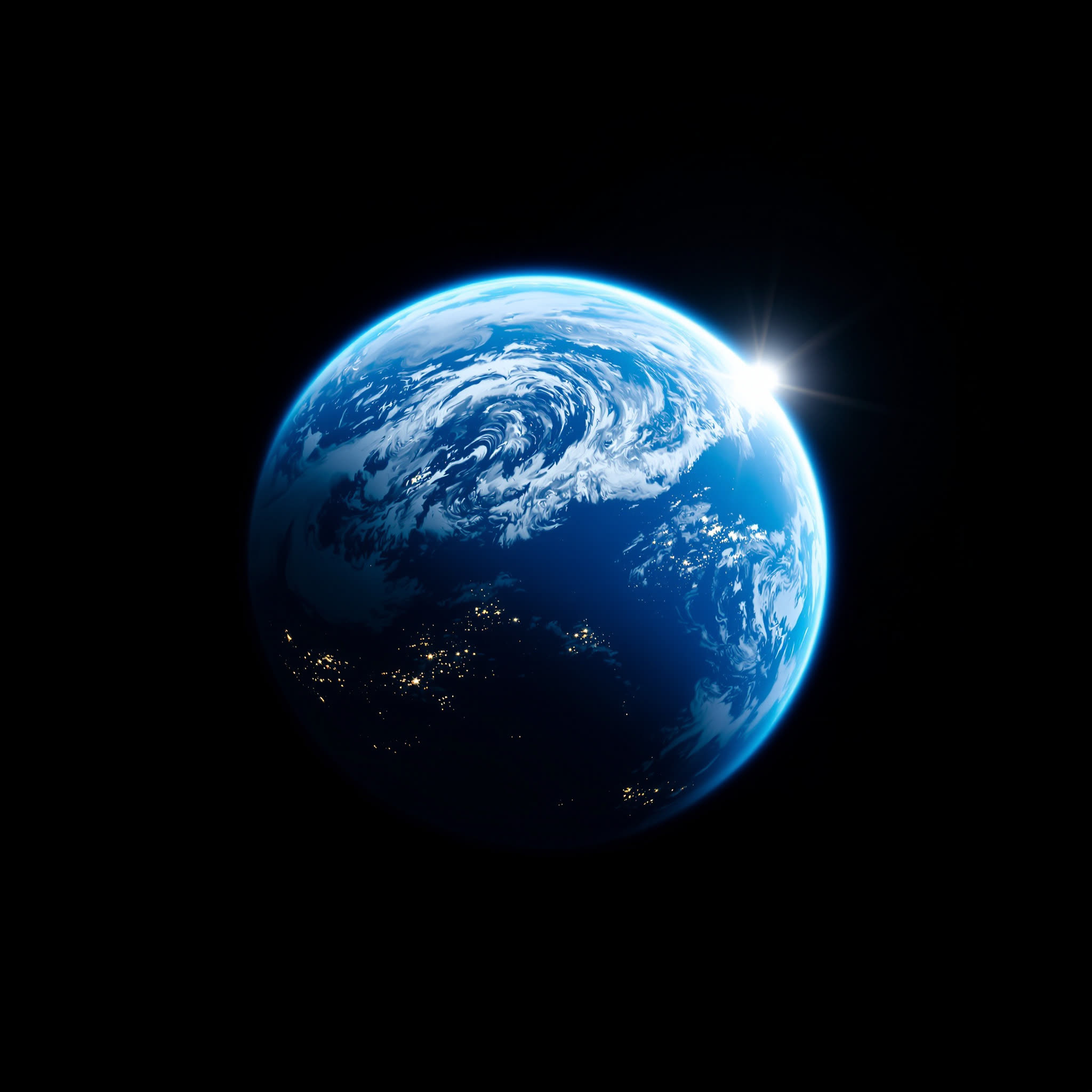
Meridian, an ocean world, half lit, city lights scattered across the night side.

PLANET

MERIDIAN

AE-01TYPE T-IV OCEANIC41.7 LY

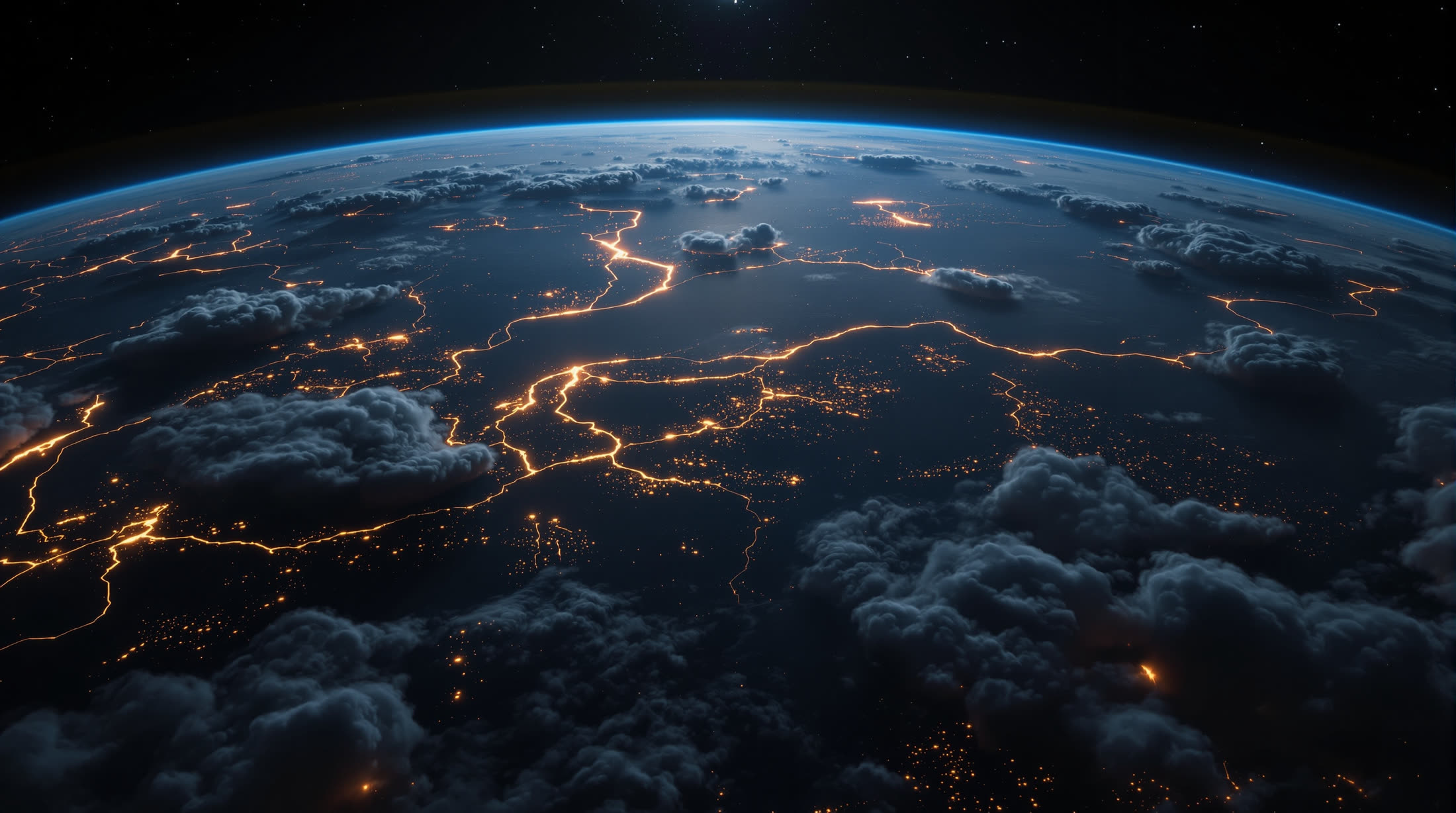
Orbital view down onto the night side of Meridian, rivers of city lights threading between cloud banks.

01Terminator crossing logged at 03:11:44 UTC. Cloud deck holds at eleven kilometres. No convective towers on this hemisphere, in this season, at this latitude.

02The emission clusters resolve into filaments. They follow rivers, not coastlines. Whatever is down there builds along water and then stops.

03Thermal delta between the lit and unlit hemispheres: 61 K. Modest, for a world with an axial tilt we cannot measure.

04Nothing answers on any hailing band across four passes. The survey continues. It is not our function to conclude.

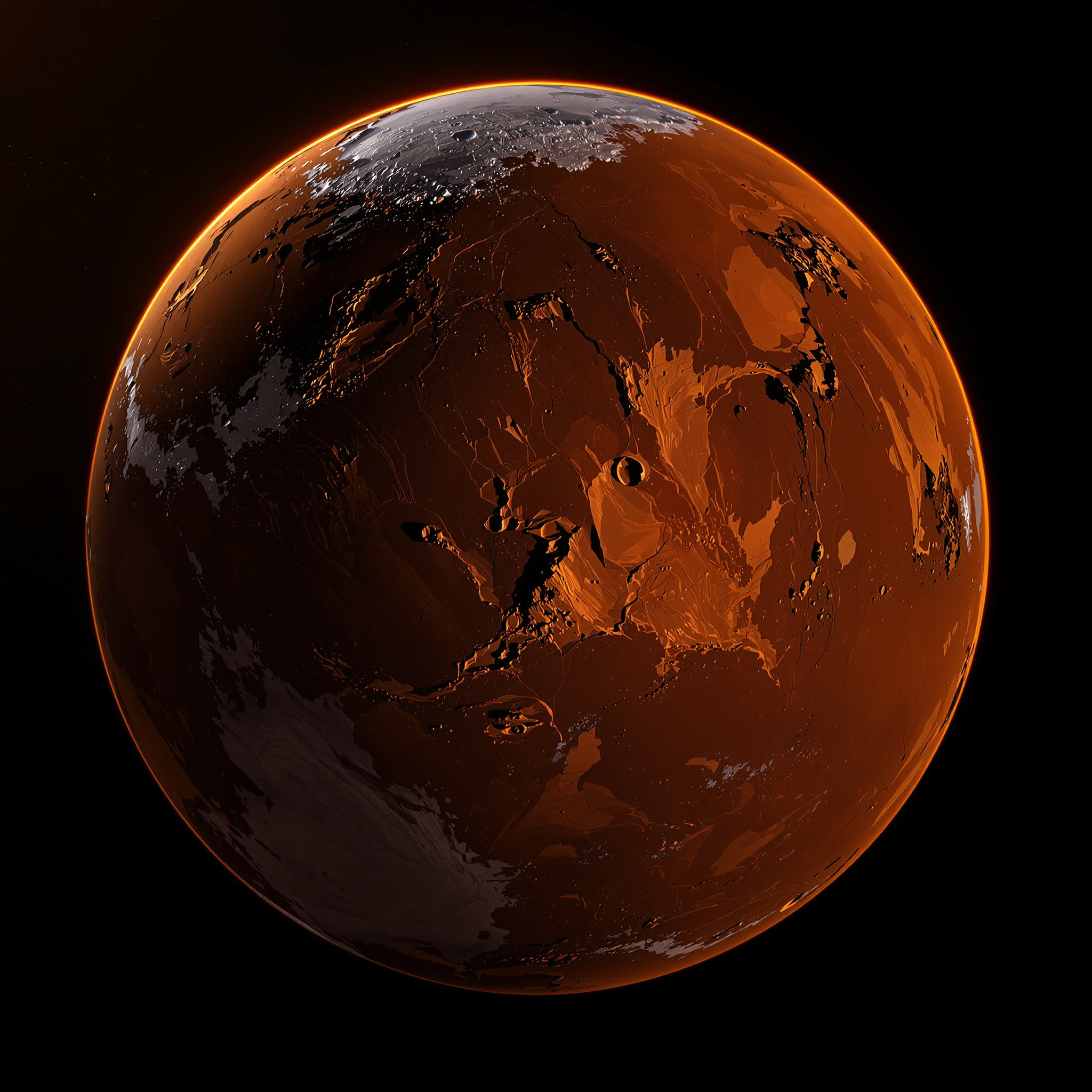
Kesh, a rust-red desert world scored by canyon systems, with a bright polar cap.

PLANET

KESH

AE-02TYPE D-II ARID41.9 LY

02 — SURFACE DOSSIER

DRAG THE SCROLL WHEEL HORIZONTAL PLATE

FIG. 02.1

The Long Cut

A single canyon system runs 4,180 km along the equator and never exceeds 9 km in width. Erosion cannot do this. Nothing else we have imaged does it either.

LENGTH
4,180 km
DEPTH
7.2 km
FIG. 02.2

Polar Cap

Carbon dioxide over water ice, layered in 214 visible strata. Each stratum is a year we did not watch. The cap retreats 40 km in the warm season and returns exactly.

STRATA
214
SWING
40 km
FIG. 02.3

Dust Season

Global opacity events last 61 to 74 days and raise the mean surface temperature by 19 K. Between them the atmosphere is clearer than vacuum has any right to be.

DURATION
61–74 d
ΔT
+19 K
FIG. 02.4

Remanent Field

No active dynamo. The crust remembers one anyway — banded magnetisation in the southern highlands, 800 nT, frozen in place some three billion years before we arrived to read it.

STRENGTH
800 nT
AGE
~3.0 Gyr
FIG. 02.5

Verdict

Habitable at the margins. Two candidate landing shelves at 14°N. Recommend a second cycle with ground penetration before any crewed approach.

NEXT WORLD
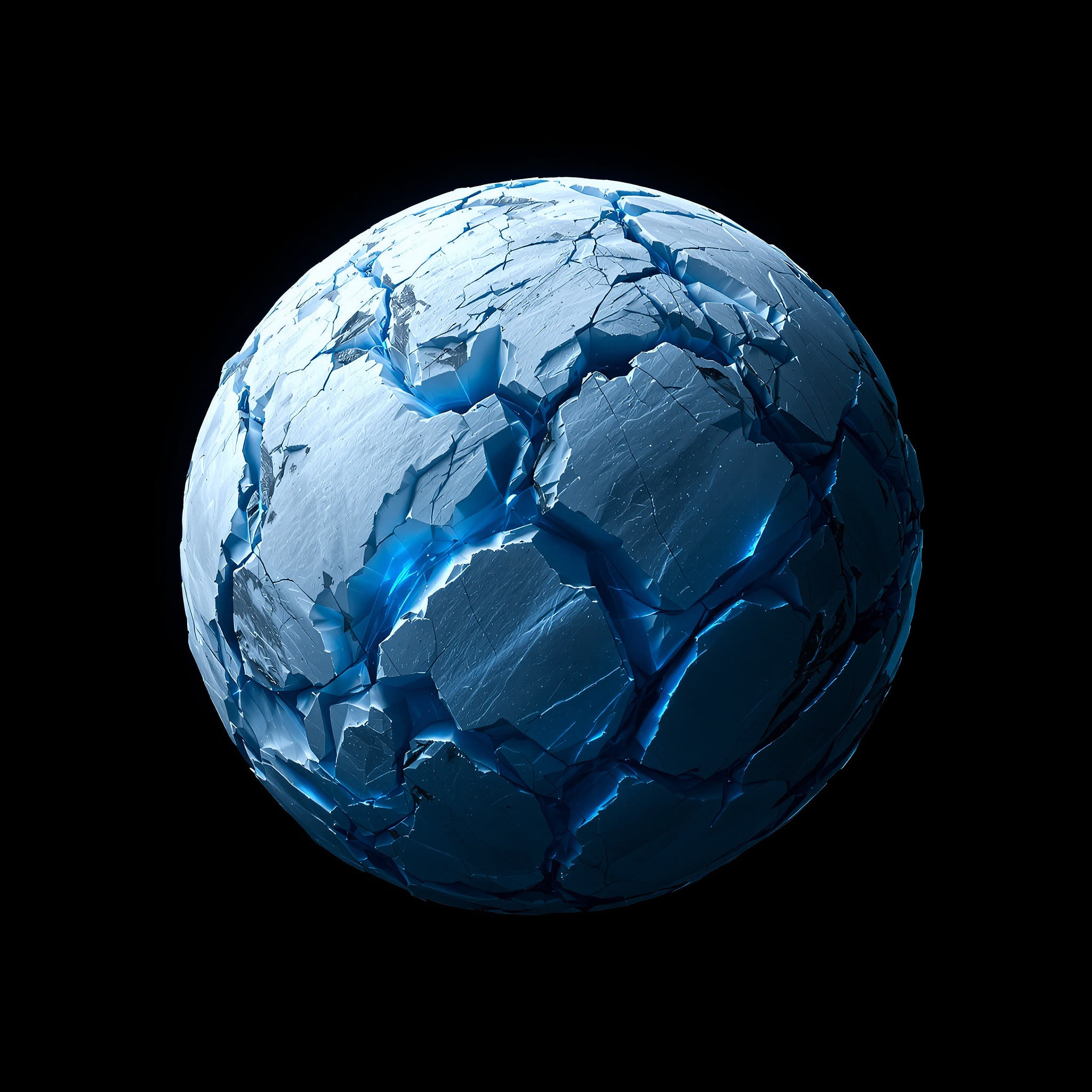
Veld, a frozen cyan-white world whose shell is broken into plates by glowing crevasse lines.

PLANET

VELD

AE-03TYPE G-I GLACIAL42.4 LY

03 — INSTRUMENT LEDGER

Returns from four passes. Sub-surface radar, 9 MHz, nadir looking. Confidence stated where the instrument allows it.

  1. R-01Shell thickness34.2 kmσ 1.1
  2. R-02Sub-surface oceanCONFIRMED98%
  3. R-03Crevasse field, major1,904 kmσ 6
  4. R-04Tidal heating0.41 W m⁻²σ 0.03
  5. R-05Surface temperature61 Kσ 2
  6. R-06Plume activity, southINTERMITTENT71%
  7. R-07Salinity, inferred21 g L⁻¹LOW

The crevasses glow because the ocean is warm and the shell is thin. That is the entire finding. Everything else on this page is arithmetic in support of it.

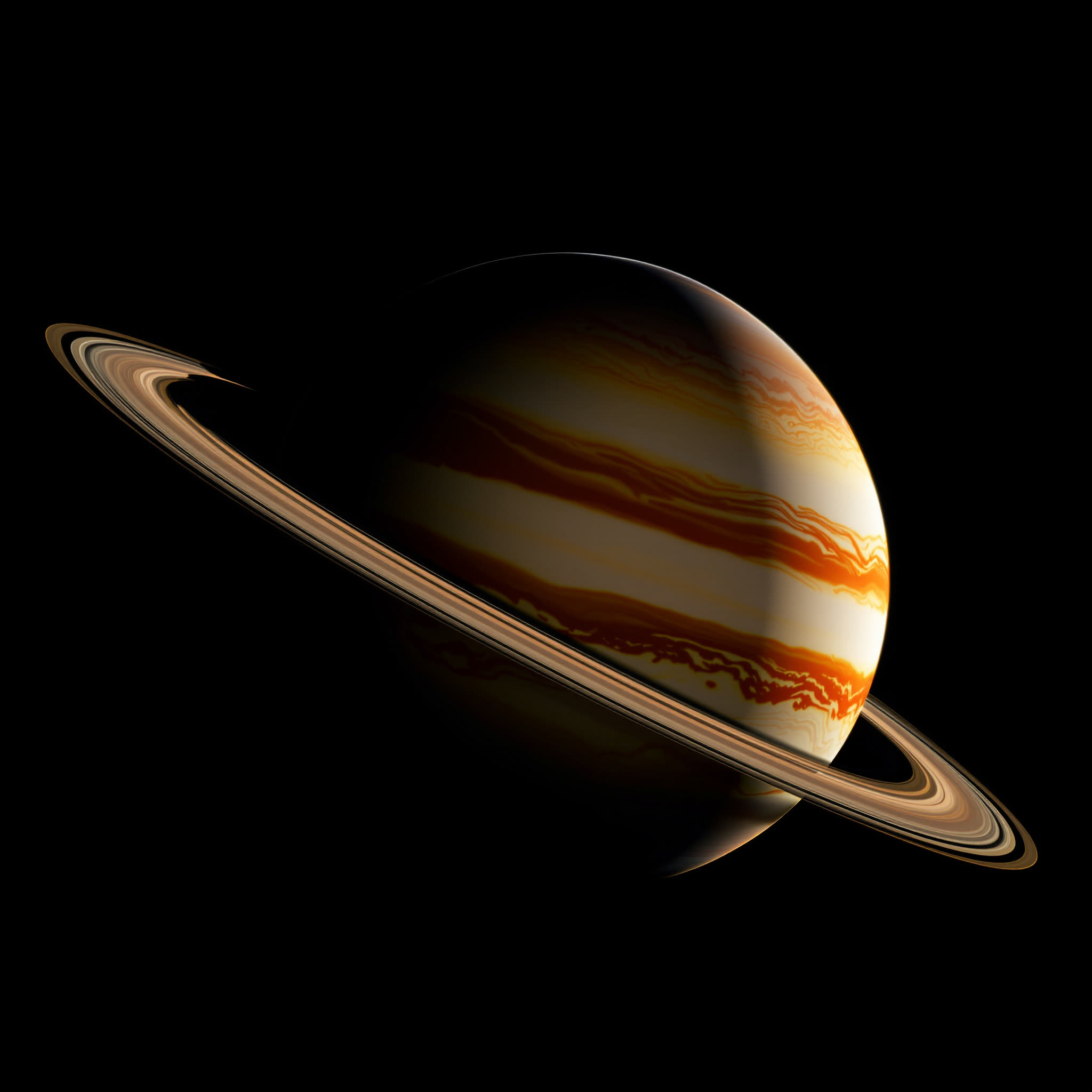
Orrin, an amber banded gas giant encircled by a broad, finely divided ring system.

PLANET

ORRIN

AE-04TYPE J-V GIANT42.8 LY

04 — RING SYSTEM

Sixty-two moons, and a gap
that should not be empty.

  • RING SPAN284,000 km
  • BAND VELOCITY1,410 km h⁻¹
  • CASSINI GAP4,800 km
  • CONFIRMED MOONS62

The bright division at 116,000 km carries no shepherd. Either we have not found the moon that clears it, or something else does.

OPEN RECORD 4,118 PLATES

FIELDARCHIVE

05 — COMPARATIVE TABLE

Four worlds,
one column at a time.

All figures normalised to the survey epoch. Mass in Earth units. Temperature is a global mean at the reference altitude, not a surface reading.

01 MERIDIAN 0 d 0 M⊕ 0 K 0
02 KESH 0 d 0 M⊕ 0 K 0
03 VELD 0 d 0 M⊕ 0 K 0
04 ORRIN 0 d 0 M⊕ 0 K 0